Tag Archives: hope

easter bunny, a short story

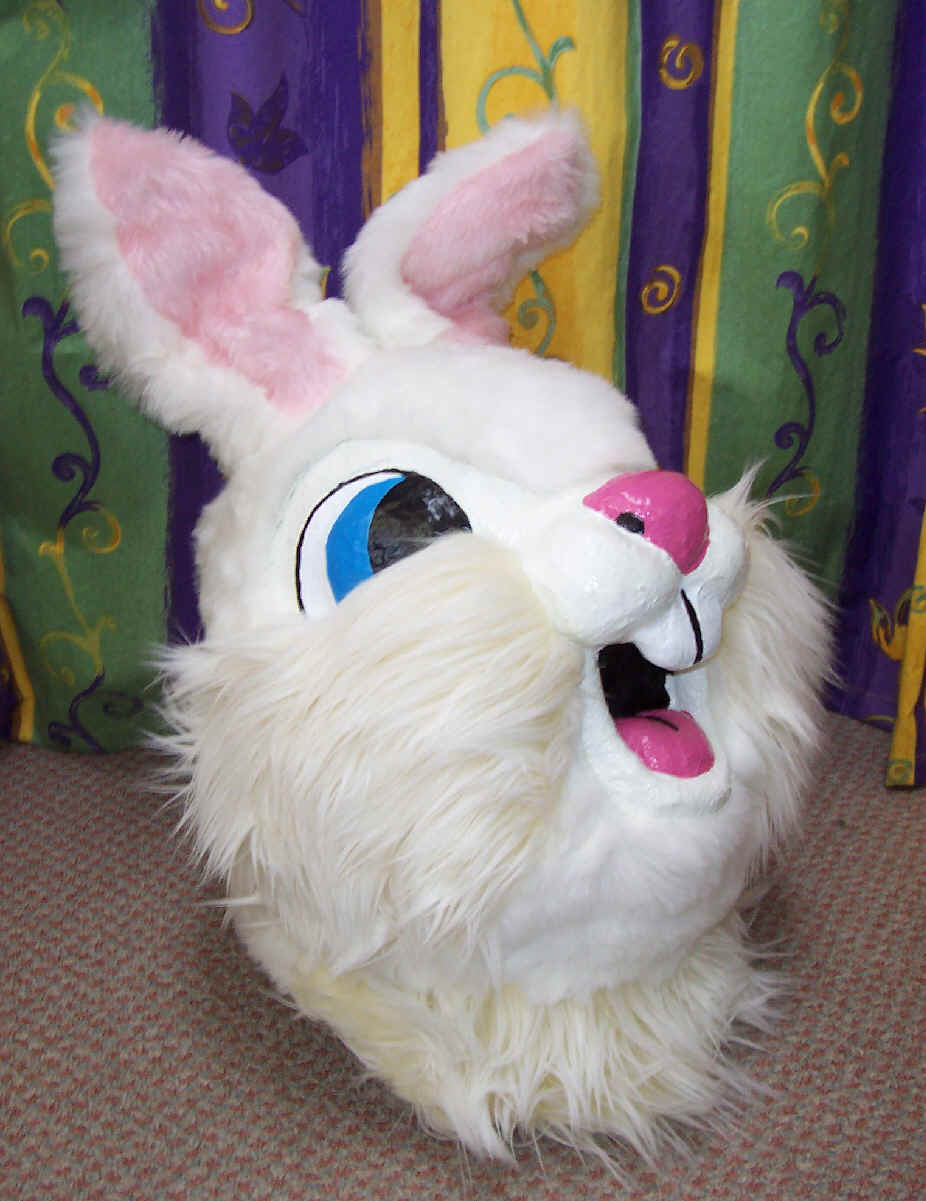
illustration easter bunny short story 2

Easter Bunny

Jenny’s hair was beginning to fall out from the radiation treatments.  Last night, at a restaurant over on the beach, their waitress had worn a rhinestone-studded baseball cap, and Jenny had admired it.  Ellen wanted to buy one for her.  In truth, ever since Jenny’s diagnosis, Ellen had been shopping as though her life depended on it, buying all sorts of gifts for her mother, tossing them into her lap, unwrapped.

At the mall, Ellen’s two-year-old, Sarah, was fidgety in her stroller, until she spotted the Easter Bunny — on a raised platform with green shag carpet and an arrangement of painted wooden tulips and eggs.  The bunny sat in a white wicker queen’s chair.  “Mommy, it’s the Easter Bunny!” Sarah shouted, waving her hands over her head.

“I see him.  We’ll go see the bunny after we get Granny’s hat, okay?” Ellen said as they maneuvered around the long line of squealing toddlers, toward an accessory store she hoped would have the hat.

“Okay, Mommy,” Sarah said, craning her head to get another look.

Blocking their path around the long line of small children were a couple of teenage girls.  One of the girls was smoking, and as Ellen passed, the girl glanced at her with what Ellen recognized as contempt, flinging her long hair back — the cigarette dangling from her full lips — and prancing over to the mirrored window of the jewelry store across the way to inspect herself.  Her bangs were teased to a great height, sprayed so heavily into place they looked varnished, though the rest of her hair hung in a limp curtain over her shoulders.

It was odd how the teenager kept staring at Ellen even as she primped in the mirror — the girl’s eyes were large and black, her face unlined, uncomplicated.  Ellen stared back without blinking until both mirror and girl were out of sight.

There was one rhinestone cap left at the store, in the window display.  “Do you have any more of these?” Ellen asked, pointing.

“That’s the very last one,” the clerk said.  She and Ellen traded smiles.

“I’ll take it,” Ellen said, not bothering to check the price tag.

On the way back, the teen girls were still near the Easter Bunny display, only now they had been joined by a couple of boys.  The dark-eyed girl slouched back on the bench, sharing a cigarette with a pale blonde wearing too much makeup.

Ellen watched her giggling daughter run to the giant white bunny.  She paid seven dollars to have Sarah’s picture taken with the rabbit, but in the first Polaroid, Sarah’s eyes were closed.  “Sleeping Beauties, that’s what we call those,” the photographer told her.  Ellen wanted to keep it anyway.

“I want to kiss him,” Sarah said.

“Okay, honey,” Ellen said, squeezing her small squirming body in a fierce hug.  She tried to imagine Sarah in another ten years, all pouty lips and thrust-out chin.  Cans of hair spray, and unspeakable things like peppermint flavored lip gloss.

The second picture turned out beautifully.  Sarah held the bunny’s gloved hand, smiling, eyes open, rapt to the camera.  The rabbit got up and strolled down the ramp of his platform, Sarah following, reaching out like a pilgrim to stroke the fluffy white fur.

“I want to tell him I love him,” she whispered to Ellen.  “Pick me up.”

Ellen held Sarah up so she could whisper in the bunny’s ear.  “I love you,” Sarah whispered into the tattered pink plush.  She kissed the nose, patting the wire mesh covering the open mouth, inside which Ellen could see the blurred outline of someone’s face.  Ellen turned away, remembering this morning, before she’d left for the mall.

“Give Granny a hug,” she’d told Sarah.

“I don’t want to,” Sarah had whined.

Ellen’s anger had seemed reasonable in one sense, though completely out of proportion to Sarah’s predictable toddler whimsy.  How many times were left to bestow such affection.  How many times would Ellen be able to bring her mother a daft, pathetic gift from the mall.  Just then, the teenagers laughed their little ignorant heads off for the hundredth time in ten minutes, the air ringing with their simple, donkeylike braying, and Ellen stabbed at them reflexively with her gaze.  How dare they be so happy.  How dare they be so young.

“Why does that stupid bee keep staring at me?” said the dark-haired girl, glaring back at Ellen.  The group around her laughed, nodding at their compatriot’s clever wit.  Ellen stopped, Sarah heavy on her hip.  Bee — for bitch?

“I was wondering the exact same thing,” Ellen said.

The blonde moved several steps toward Ellen then, folding her spindly arms over her chest, shaking her head.  “Hey,” she said, squinting her eyes.  “Don’t you get fresh with my friend.”  She tossed her head back, her stiff bangs remaining frozen, like armor, despite the movement.

Ellen bent to strap Sarah into her stroller.  “I understand your type,” she said to the dark girl, her eyes drifting over the entire group.  “I used to be a snot-nosed adolescent, just like you.”

“Still need to wipe your nose, if you ask me,” said the dark-haired girl, thrust forward on one thin leg, her shoulder flung back.  She looked to her friends, as if for confirmation, and the two boys gave each other sloppy high-fives.

The entire group of teenagers was laughing now, holding their sides, tilting their heads and letting their mouths hang open, their glistening, foamy tongues quivering with hilarity.  In a flash, Ellen’s heart hammered so briskly she could feel her pulse inside her mouth, her tongue; her teeth were being jarred out of their gums.  Ellen wanted to crush them under her shoes like bugs.  “Fuck you,” she said.  She noticed, too late, the horror of the other grown-ups as they clapped their hands over the ears of their small children, the parents staring at Ellen, their eyes wide.

“And just what kind of example are you trying to set?” one woman asked.  Ellen walked at great speed away from the mob, pushing the balky stroller as fast as she could.  Sarah sat in the umbrella stroller, clutching the Easter Polaroids in her tiny hand, her small frame curved into a limp macaroni shape, her perfect, smooth elbows bouncing off her knees as the wheels vibrated over the rough brick floor of the mall.  Ellen walked so fast she began panting, her calves starting to cramp as she rounded the nearest curve, heading for the door she had entered, long ago, in another lifetime.

She saw a bank of pay phones.  She stopped, looking around and behind her.  Fishing in her purse, she found a quarter, then flipped through the telephone directory, looking for the mall’s security office.

“I thought you should know there’s a group of disruptive teenagers hanging out in front of the Easter Bunny,” she said to the voice on the line.  “They’re standing around smoking and making rude comments to the customers.”

“Can you describe them?” the voice asked.

She visualized the girls, their long hair, their cheap-looking teased bangs.  “They had ugly hair,” Ellen said.

“Could I have a little more detail?” the voice asked.  “What were they wearing?”

Ellen could not see anything but the scornful face of the dark-haired girl, the pinched, sour face of the blonde.  “I don’t know,” she answered.

“Well, how many of them were there?” the exasperated voice asked.

“Four,” Ellen said.  “Two girls and two boys.  In front of the Easter Bunny.  Smoking and laughing and being nasty to people.”

“We’ll send someone over there right away, ma’am,” the voice said.  “Would you like to come in and file a formal complaint?”

Ellen visualized herself in handcuffs, being led away.  “No, thank you, that’s not necessary,” she said, hanging the phone up with a bang.

As she tried to push the stroller away from the phone, she saw Sarah was tangled up somehow, her fingers twined through the cord holding the phone book.  “Let go,” she told Sarah, light-headed with the panic jigging through her in ragged bolts.

“But I want to call somebody,” Sarah whined, clutching at the metal cord with both hands.  “I want to call the Easter Bunny.”

“We don’t have time for that right now,” Ellen said.  “We have to take Granny her hat.”  She imagined the teenagers telling their side of the story to the security guards.  Ellen uncurled Sarah’s fingers and flew toward the exit, toward the safety of the parking lot.  No one, apparently, was after her.

Her hands trembled, her arms weak from adrenaline as she unlocked the car door and strapped Sarah into her car seat.  Heaving the stroller into the trunk, she got in and power-locked the doors, hearing the dull thunk inside, pressing the button three more times for good measure.  As they exited to the main road, she looked back at Sarah in the rear-view mirror, saw her little round face composed and serene, her eyes open but vacant-looking.  “Wasn’t that fun?” Ellen said, smiling.   “Getting to see the Easter Bunny?”

“No,” Sarah said, her eyes droopy, her head turning to nest against the padded wing of the carseat.  Lulled by the car’s rhythmic movement, the child’s lids fluttered closed.  Her cheeks were smooth, rosy with health, her lips parted, her pearly teeth visible.  One wispy curl of hair clung to her damp forehead.

Ellen’s face was benumbed; she drove home from the mall to deliver her gift to her mother, tears coming to rest in the corners of her mouth — her cheeks twitching from exhaustion as she forced her lips to stay drawn back, her teeth bared in a ghastly smile, a grimace of love.  She would deceive no one with such a face, most certainly not her dying mother — but of course she couldn’t allow herself to quit trying.

1 Comment

Filed under anger, apologia, cancer, daughters, death, easter, fiction, love, short stories

the swiftness of dream-time, a poem

Taylor Swift Is A Paris Beauty

The Swiftness of Dream-Time

She confides unduly in strangers, asking
inappropriate, intimate questions. She has
startling, beautiful eyes, a pale luminous brown,

fringed by heavy black lashes. The fair skin
of her lids glistens like the wings of a moth,
and the expansive way she smiles makes her

delicate pink lips almost disappear. She lives
in the dream-time before marriage and children,
unschooled by the constant companionship of small

relentless demands, unaware of the eternal
ramifications of peeling herself raw
like a thick stalk of sweet cane, exposing her pithy

heart to people who don’t care to understand
the need to be loved, hidden warts and all.
Some people can never be trusted, she feels this

in her bones, yet she doesn’t want to believe it;
the ache of betrayal is like cancer of the marrow,
an oily red liquid pouring from her center

to drown the most fragile of her cells.
On personality tests, she engages in flights of fantasy:
happiness wings past just out of reach, grazing

her face with its sharp, heavy wings, ruffling her fine
hair with the remarkable swiftness of its passage.
Sitting in her green armchair, she becomes

engrossed in old forgotten novels, flipping
the tissue-thin paper with impatience,
sweeping the fallen crumbs of leather binding

off her taut, bony lap with fingers sticky
from futile perspiration. If the man she thinks
she loves asked her to marry him, she would say

yes without hesitation, but it wouldn’t make her
happy — nothing will ever satisfy her, for very long.
She doesn’t know what she wants and never will.

3 Comments

Filed under poetry

i have a high “negative capability”

illustration angels negative capability

i have a high “negative capability.”

“Negative capability describes the capacity of human beings to transcend and revise their contexts. The term has been used by poets and philosophers to describe the ability of the individual to perceive, think, and operate beyond any presupposition of a predetermined capacity of the human being. It further captures the rejection of the constraints of any context, and the ability to experience phenomena free from epistemological bounds, as well as to assert one’s own will and individuality upon their activity. The term was first used by the Romantic poet John Keats to critique those who sought to categorize all experience and phenomena and turn them into a theory of knowledge. It has recently been appropriated by philosopher and social theorist Roberto Mangabeira Unger to comment on human nature and to explain how human beings innovate and resist within confining social contexts. The concept has also inspired psychoanalytic practices and twentieth-century art and literary criticism.”

uh, i know that’s a mouthful. but it’s really accurate if you can bear to wade through all those long, long words!!!

for me, it was just a survival skill, really. how else does a fast racehorse survive being used only as a mule? what some people cannot see is that those in their lives were sent to help them heal.  sometimes, there are angels in our presence, and we can’t see it. the minute we do, we know exactly what to do.  this is what love looks like.

1 Corinthians 13:4-7
New International Version (NIV)

4 Love is patient, love is kind. It does not envy, it does not boast, it is not proud. 5 It does not dishonor others, it is not self-seeking, it is not easily angered, it keeps no record of wrongs. 6 Love does not delight in evil but rejoices with the truth. 7 It always protects, always trusts, always hopes, always perseveres.

3 Comments

Filed under notes

a-girl, a poem

illustration a girlillustration a girl african-american-embroidery-designsillustration a girl michelle obama imagesillustration a girl erykah badu download

Feisty owner behind wheel of A-Girl

The towing company has survived 15 years by moving into tough territory and trading on its pink trucks and unusual name.

By MARTY CLEAR
Published January 30, 2004
If you live in Hyde Park or Carrollwood or Temple Terrace, you may have never seen the bright pink tow trucks with the crudely painted words “A-Girl Towing” on the side.

If you live in College Hill or Belmont Heights or the un-redeveloped fringes of Seminole Heights, you probably know them well.

For the past 15 years, A-Girl’s tow trucks have been common and unmistakable sights in Tampa’s poorer neighborhoods.

“Nobody wants to go to those projects, but I don’t mind,” said owner Shelia Cole. “I’ve made a niche business for myself.”

Cole never set out to own a towing company. In 1989, with some money in the bank from a lawsuit settlement, she had planned to open a used-car lot. She would buy old cars and fix them up. As sort of an eye-catching gimmick, she would put fancy rims on all the cars in her lot.

“If I’d done that, I’d probably be rich,” she said. “Rims are huge now.”

While she was waiting to get her business licenses for the car lot, she acquired an old gray tow truck from a relative. She planned to use it to bring old cars to her lot.

“I didn’t know anything,” she said. “He showed me how to use it.”

Gradually, she started getting calls from people – friends, then friends of friends, then total strangers – who needed their cars towed,

“I’d get out of the truck and they’d say, “Hey, you’re a girl!’ and finally I said “That’s it!’ ” she said.

She realized that her gender was a better gimmick than fancy wheels. And she realized that even though she didn’t have any cars to sell, she already had a tow truck and some decent word-of-mouth business. She painted her truck pink, and A-Girl Towing was born.

(a note of preface:  i saw her tow truck years before the above article was published.  i wrote the poem a long, long time ago.  on a whim, looking for an appropriate picture to use in this entry, i searched “a-girl towing” and up popped the above article, at least a decade after i saw her on the highway while in tampa.  she was beautiful inside and out, then and now.)

A-Girl

The tow truck is ancient — dents,
fat rounded fenders, scattered
freckles of rust — but it’s painted

a shocking bubble-gum pink,
and across the door in a lavish
curly script is written, “A-Girl

Towing Service.” The appropriately
girlish driver is ebony-skinned, young,
possessing fine strong bones.

On her closely-shorn head
sits a circular, flat-topped cap,
embroidered in bright flowers.

The cap’s tassel flips saucily
in the breeze; our eyes meet
for a moment as she passes.

Her gaze seems calm, direct, filled
with the grace of one who understands
she owes absolutely nothing to the world.

When tow trucks are pink, is the world
necessarily a better place? Yes.
And suddenly I wish I could see:

who is this woman when surrounded
by her family, her dearest friends, her lovers?
Is she easy to laugh, does she enjoy

the scent of gardenias, can she whistle
with her fingers in her mouth
like I always wanted to but never could?

Leave a comment

Filed under poetry

Scientific Method, a prose poem

illustration scientific method caviar petrossian

Scientific Method

It is raining on Fifth Avenue.  I see umbrellas in a rainbow of colors but only gray clothes, gray faces, black rain, black streets.  I wait for the sign it is safe to walk, assured God will never deceive me.  The caviar store on the corner is empty again, as usual, except for the man behind the counter.  My existence remains unproved.

I, like Descartes, come from a legal family.  I too am excused from morning duties and allowed to remain abed, contemplating theoretical problems.  This morning from my high window I saw the sun rise over the river.  Fire to light, line to plane, flames on a gray mirror — objects around me glowing.  I imagined an infinity of rulers.  I felt hope rising in me with the sun. Hope for what, exactly?

The fish eggs I buy are tiny black pearls, glued together with brine.  Bursting against the roof of my mouth, juicy exclamations of Universal Wisdom.  I imagine my soul to be something extraordinary and rare, like a flame, coursing through my body.  I exist; I think; I am free of doubt.  When I was a tender baby, with skin like fresh flower petals, who loved me enough to love my soul?  Who breathed dreams into my tiny shell ear?  Who wept over me?  Who wished me dead?

I am like any ancient geometer, my problems beg for elegant solutions.  This curve, this conic slice — where will the truest intersection lie?  A series of three dreams turns me into a timid comedian, hiding behind my garish painted mask.  I am not a soldier in uniform.  Quiet, the air is still — I can feel my heart, unscarred as yet.  It only feels as though it has been broken, that is deception, it is perfectly healthy.

I am already exhausted by so much living.  While I slept as a baby, the whispers came from someone close: I will lie to you for your health; I will mislead you for your own good; I will beat you up for your excuses, I will beat you for your carelessness; I will beat the drum of my own desires, never yours.  Now, the sun is dancing upon the sea.

Neither René nor I like to live long in the same location.  We will change our dwelling place twenty-four times in twenty years.  Think of an infinite number of points.  Across from the caviar store, an icon with a gold halo, painted on peeling white brick.

I pray to you, my silly angel.  Hoping for what, exactly?  For feelings of joy, like a drug….  The joy of watching water move, tickled from beneath by fish fins.  School has let out for summer.  The joy of heated skin as it is plunged into cool water.  Feet in wet sand, toes nibbled by fish; pinched by tiny crabs, scraped raw on rocks.  The pleasure of discovery.

My mind is unclouded and attentive.  I deduce the transition of blood into water, wine into water, wine into blood.  The firm eggs of the caviar burst in my mouth, tangy grains of hope.  Posterity will judge me kindly.

Like me, Descartes could not find leisure and quiet to write until he got away from his family.  Was it the way his father drank?  The drunkenness, the curses, will repeat every evening at sunset.  Children will scream, cry.  Children will beat themselves up for an explanation.  Hope for what, exactly?

René and I both trust thinking more than feeling.  We work hard to free ourselves from the element of probability.  Salty fish eggs, trips to the caviar store, and flare-ups of hope, repeated endlessly.

A toast to us, to our new lives.  René completes his law degree on my birthday.   Both of us will wear robes of black & purple; spread a velvet cowl upon our shoulders.  Envy, we can taste envy: who breathed such curses as we slept?  I have walked in darkness so long, I cannot bear the light of day.  I enter the labyrinth, clutching a flimsy thread.  Curiosity is blind, leads me to risk, to unexplored streets, to black fish eggs in the rain.  It is still raining on Fifth Avenue.

5 Comments

Filed under prose poetry

two summers after the divorce, a poem

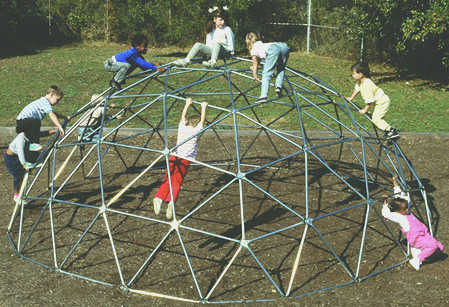
illustration merry-go-round illustration playground climber_superdome
Two Summers After the Divorce
(originally published in Snakeskin)

I. Children

The greenness, and the cars whizzing faintly by
like Central Park. Drops of water plopping
from the trees above me, cooling.
Children squeaking on the swings.
Soothing noises. A ginger-haired dog
with beautiful green eyes. A ginger-haired little girl
with yellow socks. In a blue flowered dress,
she runs past, smiling. My ex-husband
already has a new baby.

II. Privacy

My daughter’s bangs fall into her eyes,
so I ask if she wants a trim. No, she says,
her hair over her eyes gives her privacy
and makes her feel like she’s never alone.
I exchange glances with a blonde curly-headed toddler
in a black stroller with leopard print cushions,
sucking on a pacifier. She blinks knowingly.
She’s seen her own future, but will forget it
by the time she can talk. She sees colors around
people’s heads, her eyes glaze over at the beauty.

III. Expectations

Berry juice drips on my paper — a hazard of writing
outside under trees, birds and squirrels.
A granny says to her grandson,
“That’s a big spider you’re climbing on.
See his eyeballs?” They argue about letting him have his toy cars —
she wants him to climb and run and swing.
Granny has a long red braid on one side,
fading to gray at the scalp. Did she quit dyeing it abruptly
six months ago? Just gave it up, it looks like.
She’s learned exactly what you can expect from men.

IV. Desires

A young man passing is shirtless, jeans and hair wet
from riding around on his bicycle in the gentle rain.
Barefoot. Almost a man, but not there yet. He looks
furtively at women’s bodies, wanting something
but not knowing what it is. I don’t know any more, myself.
The girls on the merry-go-round scream, “Faster, faster!”
Heads tilted full back, faces to the sky, yelling.
My baby says, “This is the twisty-turny insane asylum.”
She calls to me and waves. I wave back, nod and smile.

V. Hope

A black teenager dressed in shorts and a muscle shirt,
with his baggy football jersey tucked into the waist,
draped over his thighs like an apron.
He is lean and muscular, hanging out with two fat boys.
I wonder how many times he will attempt marriage.

VI. Rational Thinking

The sky is multiple shades of grey, the breeze puffy
in medium bursts. Some little girls climb on the spider-gym
and mine says, “We’re mites. And we sit on his eyeballs.”
Redheaded lady in blue jeans and a red gingham blouse,
white wrist brace with day-glo pink straps.
The ex-husband calling me a harlot is like blaming
the broken capillaries for the bruise.

VII. The Upper Middle Classes

One impeccably dressed woman who looks just like
his new wife walks by, with two-carat stud earrings
and three small children but at least four babysitters
at all times. I’ve seen her around town for years.
She’s always pregnant or nursing.
Her feet in black sandals with bright red toenails,
professionally painted, her gray tweed suit with trousers
and her dime-store fuzzy hair-tie.

VIII. Beauty

I can smell the fragrant candy-striped amaryllis
out in the grassy circle from 20 feet away.
Fog in the hills and over the river,
branching off, banks lined with thick green trees.
Hills of crumbling shale, flowers by the road, pink,
purple, white. Plaster bunnies and fawns on lawns.
Lavender stained glass windows in the church.
Queen Anne’s lace, orange-red daylilies.
Grasshoppers flinging themselves at me,
banana spiders wait in their enormous webs.

IX. Truth

I run through the park, getting scraped by tree branches
but laughing as I run. The smell of cut grass and weeds.
Huge, opalescent night crawlers burying themselves
in leaf mulch. Character is not made in a crisis,
dear ex-husband: it is revealed.


1 Comment

Filed under poetry

the sword is a weapon of love, a poem

illustration sword is a weapon of love illustration sword is a weapon of love globe hand

The Sword is a Weapon of Love

(originally published in Stark Raving Sanity)


Brutal insight into a relationship occurs when the beloved

vomits in the bed… what can be borne, is, what cannot, dies.

Onslaughts of clarity come in the small hours like chest pains.

Can love survive endless trips to buy food?


Control your feelings — tie your hands together behind your back,

don’t pick up that stone.  Family is a genetic firestorm, shelter

yourself in a den carved out of solid rock.  Money is what creates evil.

A man I know lies whenever he can, if it will save a buck.

When you cannot decipher the callings of your heart

and soul, listen to loud music.


My grandmother left me a pair of silver goblets, which I

refuse to polish… I drank out of them on my wedding day —

they turned black instantly.  Beware of men

with black hair and dark eyes.  Beware of men who covet

objects of beauty, including you.  Their first

priority on the list of acquisitions is marriage.


When you have two opposing desires, do nothing.

Do first the one, then the other, if possible.

Take both paths simultaneously, and lie to everyone.


Beware of men who accuse you of interrupting.

If you fast for a day, you will experience quick and forceful change in your life.

The sword is a weapon of love. To be cut is to love deeply.

I know a man who hanged himself. His wife cut him down with his own sword.


In the bathroom, use lots of soap, feel emotionally cleansed.

Watch the moon, record it daily, change the color of your hair often.

Let the vines grow over the top of your roof, they will

penetrate your attic and a small wilderness will evolve over your head.


Always have a globe nearby to help you feel small.

Whenever you are embarrassed, take all your clothes off.

This will help you to remember what is really important.

Leave a comment

Filed under love, men, mysterious, poetry, relationships, sex, soul, spirit, spiritual, women