Tag Archives: love

The Healer and I, a prose poem

Image

The Healer and I

Fay, the healer and I, the subject, both consult my body in its entirety.  Fay directs me to examine the sensations within this body, the instrument of change I have placed upon her table.  There is first the feeling of water dripping, ice melting, inside the body.  The dripping is insistent, patient, slow.  The water is flowing from the head to the feet, and from the feet down into the earth itself.

What is melting the ice?  Light, and heat, from a source outside the body.  The ice melts, bringing forgotten memories & feelings.  A vision of mountaintops, sheathed in ice, but below the ice, green plants wait, alive, waiting to raise their heads, once the ice is gone.  Luxuriant jungle foliage, frozen water holding it down.  The ice melts, the water is freed — the water nourishes the plants growing on the mountainside.  The water has been held in stasis, unable to feed the growth of the plants, but now it is melting.

The water is itself pure & clear, it does not care about having been frozen, it exists only in this moment, the moment of flow.  The water is good, the force melting it is good, the plants are good, the mountain is good — there is no bad thing, only cycles of stasis & flux.  We, Fay and I, are in a period of change.

The spine is specifically consulted, the spine feels stirrings it has not felt for some time.  “Desolation is a file, and the endurance of darkness is preparation for great light.”  (St. John of the Cross.)  The frozen water has had its purpose — there can be no journey without rest.  Soon, the ice will melt altogether.  Yet the spine quivers with some unexamined tension, apart from the melting of the ice.

A sensation of another presence, another entity, squirming under the touch, ticklish, evading….

Leave a comment

Filed under health, mysterious, prose poetry, science

MY ONE YEAR ANNIVERSARY

of, like, not dying!  from a nonmalignant brain tumor!  in my frontal lobe, 35 cms. in diameter, had been there for between 17 & 34 years, they said.  donated the tissue to UF’s mcknight brain institute thingie, took a month to cry, woke up, started asking for stuff i’d forgotten i enjoyed because i just thought i was tired all the time, my husband dumped me, that’s okay, he needed dumping his own damned self!  so, here i am, 53, alive, happy, energetic, writing TONS, making new friends, etc. etc. etc.  and, like getting my ENTIRE FUCKING LIFE back in order, which hubby darling had let slide during his ten years of freeloading off me!  like, everything he wanted got done, and basically nothing i wanted got done.  so, there was that little tidbit.  but, to get back to the point, like, dude, i am totally alive & enjoying myself!  for the first time in probably 20 to 25 years!!!!!  or whenever that frontal lobe thingie started affecting me.  how big does something in the most sensitive, the most HUMAN part of the brain have to be to affect you?  probably not all that big.  so, you can see how by the end of that little “episode” i was SORT OF TIRED.  not tired now.  and single!  and happy!  and, i have a really super hot boyfriend!  who is NICE TO ME!  who wants me to succeed at what I THINK IS IMPORTANT.  so, like, damn!  things are looking up!!!!!!

5 Comments

Filed under health, humor, mysterious, notes, science

martha’s china, a short story

illustration martha's china

Martha’s China

“I’ve met a nice girl,” Martha’s divorced son, Paul, had announced one Sunday. “Her name’s Lidia. I want you to meet her sometime.”

“Well, why don’t you bring her to dinner with you next week?” she said. As she put her coffee cup down into the saucer, her wrist twisted suddenly and she nearly dropped it, making a terrible chipping sound. Holding her breath, she ran her hand over the bottom of the cup but found it unharmed. She smiled at Paul and touched her necklace. “Call me by Wednesday to let me know for sure.” Then she decided she’d sit and sip coffee and smile at her son; she was entitled. Paul looked just like his father only better, his shoulders wider, his hair thicker, his teeth larger, his eyes a purer blue.

***

This year, in honor of Thanksgiving, Martha’s second daughter-in-law, Lidia, wore a white jumpsuit, gold belt and shoes, and a great deal of white plastic jewelry. A long bead necklace was wrapped twice and knotted around her neck, bangle bracelets in random widths jangled everywhere, too-heavy earrings sagged the little holes in her lobes. There was a brooch too, some sort of spidery circle with a gold anchor dangling in its center.

Unfortunately, the white Thanksgiving jumpsuit was tight everywhere that Lidia wasn’t. Martha breathed deep and smiled anyway, gripping the hot solid hand firmly, glad to be helped up the front stoop even by a woman like this. Well, at least she’s got him going to church again, Martha thought — we’ll just see how long that lasts. Before his and Lidia’s wedding day, Paul hadn’t set foot in a church of any kind for twenty-five years, not since the last day he hung up his altar boy outfit. He’d had a civil ceremony with his first wife. Maybe that was her fault too — hell, everything seemed to be the mother’s fault, these days.

Martha should have known from the beginning how this second marriage would turn out. Lidia had no hesitation in her voice. Brassy. From the very beginning, she just blared right out with everything. “Hello, Mom,” she’d say to Martha, her cheeks round and orange with too much makeup, front teeth stretching her upper lip, keeping it from ever completely closing, making the words come out slippery-sounding: too loud, too bright. Not a lisp, but damned close. All she needed was a fluffy tail to snap behind her, Martha thought — it would go right with the rest of her chittering.

Not like Neal’s mother, Paul’s first wife, Joanne. Martha sighed, remembering Joanne as she sat down on the too-soft living room sofa, some rattan thing covered with the kind of material she would have expected to see worn by a belly dancer. Why, for all her problems, Joanne had been a lady. Martha had told her son that when he’d brought Joanne home for dinner for the very first time. “This girl’s too good for you,” she had said, right at the table in front of everybody. Damned if her conscience wasn’t clear on that one. Poor Joanne hadn’t known what she was getting into — none of them had. Not that Paul was a monster, just lazy. Almost spineless except when it came to his expensive toys. Those damned boats. Martha couldn’t stand it, but what could she do?

“Happy Thanksgiving, Mom,” Lidia said, plopping herself down next to Martha. “I hope you brought your appetite.”

Martha smiled. “Thank you, dear,” she said, patting her daughter-in-law’s hand lightly.

***

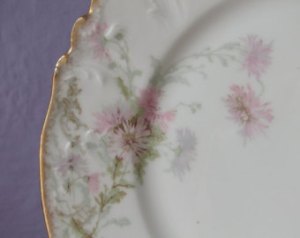
Martha’s china was Limoges. There was a border of tiny flowers, handpainted pink and green and a broad line of gold around the edges, the coffee and demitasse cups so thin you could see through them when you held them up to the light, like eggshells. Martha had inherited it from her mother and father when she was eight.

The accident that killed them had involved electricity. Whether it had been lightning or wiring, she never knew. In any case, she tried to imagine their final moments based on what she knew of electricity from watching movies and reading the encyclopedia. Waking early in the mornings, she would throw off the covers and lie there in the pearly dark, stretching her arms and legs out, stiff, at right angles. She would open her mouth until she heard her jaw pop. Her body would tremble, her lips sting. When she finally let herself go limp it was a relief to be back.

Martha was sent away to boarding school the following year; her parents’ money was managed by some cousins of her father’s. During her senior year, she was called in to the headmistress’ office and informed: fiduciary malfeasance. Of course she would receive her degree with the rest of her class. The words “charity case” were never used. Much later, memory and resentment molded the set of her mouth, pinching her lips with sharp lines: by the time she was fifty, no one guessed she had once been smoothly, delicately beautiful, the kind of looker other women couldn’t even bring themselves to dislike, although their first impulse was always to try.

***

“Where’s Paul?” Martha asked.

“Oh, he had to run out to the store,” Lidia said. “I forgot the cranberry sauce.” She chuckled, shaking her head. A small fleck of saliva flew from her lips as her teeth drew back. “Brain like a sieve sometimes. He’ll be back any minute now.” She stood up and walked over to the door leading to the T.V. room. “Neal! Eddie! Get off that Nintendo and come say hello to Grandma Bergen.”

Their boys had been five when Lidia and Paul married. It hadn’t bothered Martha at the time that they wanted Lidia’s boy, Eddie, to call her Grandma, too.

“Hi Grandma,” said Neal. “Happy Thanksgiving.” He bent and kissed her shyly and she felt a slight prickling fuzz tickle her face with the kiss. He was so white-blonde it wasn’t something she would have noticed from a distance. He was growing up, that was clear. He had a small pimple on his chin.

“Grandma, how’s it going?” Eddie said, and he stuck out his hand. She shook it, his hand warm and heavy like Lidia’s.

“Very well, Eddie,” she said. “Thank you.”

***

In the end, “fiduciary malfeasance” notwithstanding, young Martha had been able to keep the china and the silver, and her father’s monogrammed, twelve-piece dresser set. There was a little cash left over. She managed to graduate from Boston University by wearing the same dresses all four years and waitressing at Woolworth’s, not precisely what she would have chosen, but good enough for a Massachusetts teaching certificate. She interviewed at high schools all over but ended up teaching back in Brookline, where she had been born. Wanting to keep her figure, she joined the municipal tennis league. They played tournaments once a month. It seemed like a good way to meet people, better than church, which is what the other teachers did. Using God as a dating service was hardly a ticket to heaven.

***

“Can I get you anything, Mom?” Lidia asked her. “Some iced tea or a Coke?” Paul and Lidia were born-again Baptists now: no alcohol, even on holidays.

Martha smiled slightly as she remembered the old joke: What’s a Methodist? A Baptist who can read. “Iced tea sounds nice,” Martha said. She heard the gravel in the driveway crunching and the dogs started to bark. “That must be Paul. Go tell him his mother’s here.”

“Oh, he probably saw your car already,” Lidia said. “I’ll be right back with the tea.”

***

Martha’s ex-husband, Fred Bergen, had been a handsome young man, five years older than Martha. He was well over six feet, blue-eyed and blonde, with smooth Scandinavian skin that turned a dark, clear brown every summer. Martha was dark, eyes and hair, except for her skin, which was thin and light, looking almost transparent in the sun, a raised mole in the inside crook of her elbow the only mark on her. Next to him she looked like a foreigner, but her ancestry was English on both sides. He had gone off to Dartmouth to study Engineering but came home to Brookline to be a gentleman.

He was an ace tennis player; she was ready to get married. Her china saw frequent use. The teaching certificate moved into her scarf drawer. They had one child, a boy, named Paul, after her father.

The first few years after Paul was born, they lived just outside Concord, on the farm her husband Fred had inherited from his family. The three of them rode through the woods almost every Sunday, Paul on his Shetland pony, the reins tied to the side loop of her saddle. She especially loved the fall woods, the bare trees making everything look so clean. Everything was gray, but there were no real shadows.

***

“Well, hello there!” Paul said, pulling his satin baseball jacket off as he stood in the living room doorway. Throwing it over a chair, he sat down across from her. His smile was broad, his square white teeth perfect. The skin around his eyes wrinkled heavily as he smiled, pulled up into bags thrown into even harsher relief by the lenses of his glasses, something that still surprised her. If her son was getting old, she wondered, what was she?

“Hello there, yourself,” she said. She held one arm out to him, summoning. Heaving himself up out of the chair, he bent for a kiss. She smelled shaving lotion and dandruff shampoo; he fumbled at her cheek. She took one of his hands in hers, feeling the hard, dry skin of his fingers, squeezing it twice. Sitting down next to her this time, his breath whooshed out as if he had been holding it.

“How’s your father?” she asked. Their divorce had come years ago, when, of course, she was considered too old for it. Separated for a long time already, she nonetheless wanted the formality of the piece of paper. She took her own Social Security, not Fred’s, so it didn’t really change anything in a practical sense. It had been the kind of case the judge laughed at right in court. That irked her more than any of the rest.

Family holidays, of course, nothing had to change.

***

Martha had blamed herself the second time the money went. Not as much as she blamed Fred, of course. But she, of all people, should have seen it coming. The gin games at the country club were no surprise, but as for the horse races — she had had no idea. They sold the farm to pay off his gambling debts, land that had been owned by the Bergens for three hundred years. Neither of them had ever lived anywhere but Massachusetts. It was Fred who promoted Florida. He’d heard there were still bargains to be had in Miami.

They bought three lots with the money they had left, building an apartment building on the water in Coral Gables. Fred’s tan became year-round. He had started to put on weight, but it came off now that he was busy with the yard work and repairs around the building — five units — wearing swim trunks and sandals, beachcomber style. Martha packed her wool suits away in a trunk under the stairs. They both looked ten years younger, so maybe it was for the best.

Paul started first grade, then second, then third. When she found him rummaging through the old trunk full of woolens for a Halloween costume, she realized it was finally time to clean house. She got rid of all that heavy winter clothing, except for one pair of jodhpurs, sort of a souvenir, not having any use for them anymore but afraid she’d be sorry later.

She used the Limoges every Thanksgiving and Christmas, but then the company finally discontinued the old pattern, and she was afraid of ruining the set. Counting the different pieces, she wrote the numbers down on a 3×5 card taped to the inside of the china closet’s door. She’d dust the outside of the closet, telling Paul — someday, when you get married, this will be yours. Okay, he’d say, nodding. Is it all right if I go fishing with Gary this afternoon after school? She’d tell him yes, then watch him run out the door, worrying he’d never know what he had really come from.

But had knowing where she, herself, “came from” ever done her any good, she wondered?

***

“Oh, Dad’s the same as ever,” Paul said to Martha, rolling his eyes. “He ought to be here soon. I called Yellow Cab this morning. They were supposed to pick him up at one-thirty.”

Fred’s eyes were shot, but it was really the drinking that kept him from behind the wheel: the way his hands shook.

“Now, why did you go and do that?” Martha said. “I could have picked him up on my way.”

“I knew you’d say that,” Paul said. Then he chuckled. “I figured the cab deal was easier for everybody. If you really want to, you could drive him home, I guess.”

“I was only married to the man for forty-five years,” Martha said. “I can put up with him for one more hour in the car. Besides, then he won’t be able to stop and get loaded.”

Paul snorted, a half-laugh. “I don’t worry about it. I’ve already told him if he wants to kill himself he should go ahead.”

***

When Paul flunked out of the University of Miami his junior year, he had two options: the Coast Guard or Vietnam. It wasn’t really much of a choice. He spent the first eighteen months in Greece, working on Radio Free Europe. His letters home were short. The girls are beautiful here, he wrote. Martha was relieved when he was sent back to the States and stationed in Key West — no Greek wife, and that was fine. Every week or so he’d drive up for dinner.

She loosened up a little about the china. What’s the point in having something you don’t use? She would ask herself. She felt relatively safe using it for coffee and dessert since there were fourteen each of the small plates, cups and saucers. She could break two and still have a set of twelve.

***

Paul pressed his lips together and twisted them to one side. “Besides, as long as it’s not in my house, I really don’t care how much he drinks. It’s not my problem anymore.” He shook his head as if trying to convince himself.

Lidia came back in, holding a glass of tea in one hand and a magazine in the other. The ice tinkled as she walked. “Mom,” she said, “this is something we’re really proud of.” She handed the magazine to Martha, putting the tea on the coffee table. “It’s on the last page,” she said.

Martha opened her purse for her reading glasses: frosted blue frames with half lenses, on a silver chain. She held them to her nose, the chain rattling against her string of amber beads as she fiddled with the magazine. It was last month’s copy of Florida Sportsman — on the last page was a photograph of Paul on the deck of his boat, holding up a very large and very dead bull dolphin, his fingers hooked in the poor creature’s gill covers. “My, my,” she said, looking up from the magazine and raising her eyebrows. “Isn’t that something!”

“The fish was forty-nine pounds, even,” Paul said. “Half a pound over the local record.”

Martha smiled, peering at her son over her glasses. He wasn’t a outright gambler, that was true, but in a hundred other ways he was exactly like his father. This fishing obsession: did he really think it was enough? A person she raised from a baby — living his adult life primarily through jerkings and spinnings felt from the end of a pole.

“Congratulations,” Martha said, removing her glasses and folding them carefully, setting them on the coffee table in front of her. “I hope you’re having the fish mounted.”

“Of course,” Lidia said, leaning over the back of Paul’s chair, her solid brown arms wrapped around his neck and her chin resting lightly on the top of his head. “The boys and I are giving it to him for an early Christmas present.” Paul twisted his head and smiled up at her.

The dogs barked again. A cab pulled into the driveway. The noise of the idling engine echoed against the stuccoed concrete block of the house. Fred climbed awkwardly out of the back seat, wearing an old plaid patchwork sport-coat and thin wire-rimmed glasses, his wispy gray hair blowing crazily in the breeze. Martha heard him call toward the open living room windows.

“Hello!” he said, his voice strained. His hand trembled as he futilely tried to smooth his hair. Finally he put both hands to the sides of his head, cupped behind his ears, calling again. “Somebody come out here and help me, would you? I’ve got some pies to bring in.”

Paul looked at Lidia and then back over at Martha, rolling his eyes. “The mincemeat,” he said. “I told him we already had dessert this year. Oh, well.” He got up and went out to help his father.

***

Martha had cooked a leg of lamb in honor of meeting Joanne. Putting real butter out for the mashed potatoes, she even brought out the big serving platter and the covered vegetable dishes from the Limoges. The dessert plates and coffee cups were on the table too, as usual.

Joanne was a nice girl, Martha saw that immediately. She wore a green linen suit and matching pumps; her hair was long, just past her shoulders, with square bangs, a white headband holding it back neatly. Her hand was small and cool in Martha’s own as she said hello. “It’s so nice to meet you, Mrs. Bergen,” she said.

“Oh, please call me Martha.”

“All right,” Joanne said, smiling. Her teeth were as glossy and prettily shaped as kernels of white corn. “Your home is lovely. It seems so nice and cool on the water.”

“Yes, we enjoy it,” Martha said. “Are you a native of Miami?”

“Not quite,” said Joanne. “I was born in Delaware. But we moved here when I was three, so I really have no memory of the cold.”

“We moved down from Boston when Paul was just a little older than that,” Martha said. “I don’t think I could survive a New England winter now.”

Joanne admired the table. “It’s so beautiful!” She touched the covered tureen in front of her. “Is this Rosenthal?”

“No, Limoges,” said Martha. “It belonged to my parents. The pattern is discontinued, you know, so I don’t use it very often. But this is a special occasion.” She looked over at Paul and smiled.

She gave Joanne and Paul the Limoges as a wedding gift.

***

“Fred’s always loved mincemeat pie,” Martha said. “It’s the only thing he ever learned how to cook himself. The man eats out of a can, breakfast, lunch, and dinner.”

“It’s cute,” Lidia said. “My father couldn’t boil water without instructions. I like a man who cooks, even if it’s only one thing.”

Martha stared at her. “Pie crust is quite an accomplishment, when you think about it that way,” she said, nodding her head and smiling. “I suppose I could break down and have a piece this year. The heck with watching my weight on Thanksgiving.”

Fred puffed his way into the living room, wiping his glasses. His eyes looked small and defenseless, his face flushed even more than usual. “Well, that was a rare event,” he said. “An American cabdriver, white to boot. I asked the guy what he was doing driving a cab.” Shaking his head, he put his glasses back on, then took out a hard rubber comb and swiped at his hair. “He must be a real loser.” He lowered himself into the armchair next to the sofa. She caught a whiff of him: dry, musty. His pants were creased smartly but there was a faded grease stain on the knee. Turning to Martha, he held out his hand to her, which trembled although she knew he strained to hold it firm, and she felt a piercing of loss for him. I suppose in his own way, he pities me too, she thought. She must appear just as sad to him, even without a tremble.

“Hello, my dear,” he said, and he kissed her hand, his lips warm and slightly moist.

***

Poor Joanne hadn’t wanted to quit her job at the bank, but Paul insisted after Neal was born. “No son of mine is going to be raised by a babysitter,” he said. Martha felt he had a point — but what good was it if Joanne was miserable at home? She herself had missed teaching, although she’d never seriously considered going back to work until Paul was in high school. But she certainly wasn’t going to come between husband and wife. Her two cents, she kept to herself. Then Paul told her Joanne was having a problem with her drinking. He’d seen enough of that with his own father, he said, to last a lifetime. After he filed for divorce and custody of Neal, she didn’t mention anything to anybody, just decided to reclaim all she had left of her barely-remembered parents.

“Well, hi,” Paul said, when he opened the door and saw her, unannounced. His eyebrows were raised, but he didn’t ask. “Joanne’s with Neal down the street at the Gallagher’s. Kids’ birthday party.”

“That’s no problem. I’m here to get the china,” she said. Paul stared at her. He didn’t seem to understand. “The Limoges.”

“Oh, that,” he said, moving back out of her way as if he were afraid, and an odd memory of him at two years old flew by her, making her weak, making her want to squeeze him. They hadn’t hugged in years: they weren’t the huggy type, like some. Still, she had some idea what she was missing.

“Let me think a minute where we keep it,” he continued, taking his glasses off and rubbing one eye slowly. It reddened and he put his glasses back on. “That cabinet over there, maybe?” he said. “Underneath?”

“I know where it is,” she said. Joanne would never forgive her, but it couldn’t be helped. She packed the china in the special boxes she’d bought on her way over; Paul carried the boxes to the car for her.

Before the divorce was final, she called Joanne to explain. She realized Joanne knew her history, but still, she was ready to apologize — but Joanne hung up on her in the middle of it.

***

“Well, it’s about time we sat down at the table,” said Lidia. “Neal! Eddie! Turkey time!”

Martha hauled herself up, out of the overstuffed sofa. She held her arm out to Fred, still struggling in his armchair like a snail trying to flip its shell. “Let me help you,” she said.

“It’s a nice chair, but it’s hell to get out of,” Fred said. His touch was strangely comforting, and she held his hand firmly even after he was up out of the chair. They had the past in common if not the future. At my age, that’s about all you can ask for, she thought.

She led Fred into the dining room and they sat down opposite the boys. “What a beautiful turkey!” Martha said. And what an ugly serving platter, she thought.

She had given the old Limoges set back to Paul on his and Linda’s fifth anniversary, hoping to see it on the table on holidays, hoping Paul knew what t meant to her. But this platter was a cheap ceramic. I don’t know why I ever imagined Lidia would appreciate my Limoges, she thought. It looks like she picked this piece of junk up for a buck ninety-eight at K-mart — worse yet, at a church rummage sale. You’d think Paul would say something, though.

“This is an interesting platter,” Martha said to no one in particular after she sat down, putting her fingers out and stroking the edge. The feel of it was clumsy, the overglaze too shiny, far too thick: like somebody brushed it on with a pair of old socks. “Such bright colors.”

“Do you like it?” Lidia asked, smiling. “Paul picked that out just last week. It’s from Italy. Really perks up the bird, doesn’t it?”

“Yes,” Martha said. She looked around the table. Surely there was something? But it was all the same. Thick peasant pottery — vegetable dishes, gravy boat. It was everywhere. “I suppose it is nice to have a change of scene at the table once in a while.” She unrolled her silverware and placed her napkin in her lap, smoothing it down over her knees.

They were slicing the mincemeat pie when she asked for coffee. “Mom, I’m sorry, I didn’t brew any,” Lidia said, frowning. “We’ve gotten out of the habit now that you’re the only person who drinks it. I’ve got some instant, is that all right?”

“Of course,” Martha said. “As long as you’re going out to the kitchen for it, would you mind putting it in one of the old cups for me? They’re so nice and thin it makes the coffee wonderful.”

Lidia turned and looked at Paul, although it seemed she still spoke to Martha. “The old cups?” she said. “You mean from the set you gave us?”

“Yes,” Martha said, nodding, adjusting her plate of mincemeat with two fingers. She turned to Paul expectantly as well.

“Paul,” Lidia said finally, when he said nothing. “Didn’t you talk to her about that?”

He looked up at the ceiling and forced air out of his closed lips, a burbling inter-spousal sigh. “Oh, boy,” he said. “Here we go again. I told you it was okay to donate it. We’ve used that stuff maybe five times in five years.” Looking back down from the ceiling, he turned to face Lidia. His face wavered, an uncertainty seeped in around the corners. “Actually, I don’t think I did mention it to her.” Turning to his mother, his head moved slowly, as if he had slept on his neck wrong and had a terrible crick. “You didn’t want it back again, did you, Mom? I don’t think they’ve had the sale yet. All the stuff is just sitting in the vestry meeting room.”

Martha sat perfectly still, taking in the light as it reflected off his face, which suddenly seemed ten, no twenty, years younger. Her breath held fast, but not trusting herself to let it out, she drew her napkin from her lap. Stalling, she used the napkin to clean her glasses, now hanging around her neck on their beaded chain. The thick polyester was wrinkle-proof but hardly absorbent, so all she managed to do with it was smear the lenses, making them worse than before. Dust and grease wouldn’t leave. “What sale?”

Lidia answered. “The annual white elephant sale. We sent over the china as a donation.”

“Oh,” Martha said. She picked up her fork and nipped the point off her piece of pie, scraping the tines harshly along the pottery surface as she scooped up the mincemeat. “If it’s not too much trouble I would like you to get the china back.” She looked across the table at Paul as if they were the only two in the room. “Don’t you think you should have asked me first?”

“I didn’t realize it was still your property,” Paul said, his face reddening. “It seems to me when you give somebody something that ought to be the end of it.” He stood up and leaned over the table, balanced on his fingertips. “I’ll get the china back, don’t worry. And then I never want to see it again.”

“I’m sorry,” Martha said. What’s wrong with me that I didn’t see this coming? she wondered. C-plus motherhood, is that what I’m left with?

“She’s been nuts over that china since I met her,” Fred said, shaking his head. “I’ve tried to tell her she shouldn’t let something like that get such a hold over her. It’s not healthy.”

Martha grabbed his arm, hard, and Fred turned to her, his eyes wide with surprise. She shook his arm a little as she spoke. “You keep out of it. It’s nothing to do with you.”

“You see what I mean?” he said, winking in Lidia’s direction.

“I’ll go get your coffee, Mom,” Lidia said.

***

After finishing her pie and a cup of microwaved instant, she had Neal walk her out to the car. Paul would have to call Fred a cab after all. “My back’s bothering me,” she explained. “I want to get home and right into a hot tub.”

“Grandma,” Neal said, holding her arm as she walked slowly down the slippery gravel drive. “Don’t take it personal. The china, I mean. They don’t have anything old in the house. They aren’t into antique stuff.”

She felt as lightheaded as when she awoke in the middle of the night, fighting to remember some crazy dream. There’s no panic like the panic of an old woman, she thought — though we’re supposed to have wisdom. The panic ebbed a little as she exhaled, and she sighed. “I wanted them to save it for you, Neal. For when you get married.”

Neal shook his head. “That’s a long way off, Grandma.” He laughed shortly, running his fingers through his long bangs. “Maybe never, who knows? Anyway, it’s better if you keep the china at your house. It takes up so much room.”

“Is that what Lidia says?” she asked him, but he only shrugged. The boy had learned something she hadn’t, she realized. “Oh, never mind,” she said, suddenly limp. She opened the car door and sat down heavily. “Bend down and let me give you a kiss.”

“Goodbye, Grandma,” Neal said. “Happy Thanksgiving.”

As she looked in her rear view mirror, driving off, she could see him standing out in the middle of the street, waving to her. Well, what did I expect, anyway? she thought bitterly. A memory pricked her suddenly, making her eyes water, partly from tears gathering but partly from the glare off the road and the way her thoughts shifted her eyes’ focus from the road itself to something impossibly far-off — a forced gaze she found difficult to wrench out of. She idled for a long time at the first stop sign out of sight of Paul and Lidia’s. Years ago — her mother’s hand, stroking her hair, leaning over the edge of the bed in the darkness. A firm touch, though it tickled and made her shiver just a little. For the life of her, though, she couldn’t recall the sound of her mother’s voice. Just one word, she thought. Just one. She waited to hear.

A horn sounded behind her and she jumped, startled so brilliantly it hurt to breathe for a moment. “All right, all right, what’s the rush, buddy?” she said, jerking her gaze back to business, blinking as her eyes finally overflowed, fat round drops. But the fabric of her black skirt instantly absorbed the tears, and so, looking down at her lap for confirmation, before she pressed the gas pedal, she saw only the faintest of shadows staining the darkness of the fine wool.

Leave a comment

Filed under short stories

my tete a tete with officer charles owens, a nonfiction note

147

“What can I do for you, officer?”

“Why are you so hostile?”

He asked for my license and registration and proof of insurance, which I gave him. He walked back to his vehicle and did whatever police officers do, I suppose run my driver’s license number to make sure I wasn’t wanted for some crime or something. And to make sure the vehicle wasn’t stolen, I suppose. And to make sure I had insurance, because that was something else he could have given me a ticket for. I do give Ofc. Owens points for being thorough. Just not any points for being correct.

“I’m giving you a ticket for careless driving.”

“How was my driving careless?”

“I heard your tires squeal.”

“But the road is wet, it has been misting for at least the past hour, maybe two.”

“The road is perfectly dry.” The mist swirled around his head as he spoke those words. I thought to myself, doesn’t he notice it?

“Is this the best use of your valuable law enforcement time? Giving a woman driving home alone at one a.m. in a white Toyota minivan a ticket because you heard her tires squeal on the damp pavement?”

“I smell beer on your breath.”

“Well, I did have one with dinner, about four hours ago, I haven’t brushed my teeth yet. I suppose that’s it. Would you like to perform a field sobriety test?”

“No.”

“Would you like to do a breathalyzer?”

“I’d have to call the van. Do you want me to call the van?”

“Sure, let’s have a party! No, that’s okay, you don’t have to call the van.”

Further discussion, about the ramifications of the ticket, etc., how to contest it, etc.

“Oh, you have a dog? What’s his name?”

“Justice.”

“Can I meet him?”

“No.”

“Can I take your photograph?”

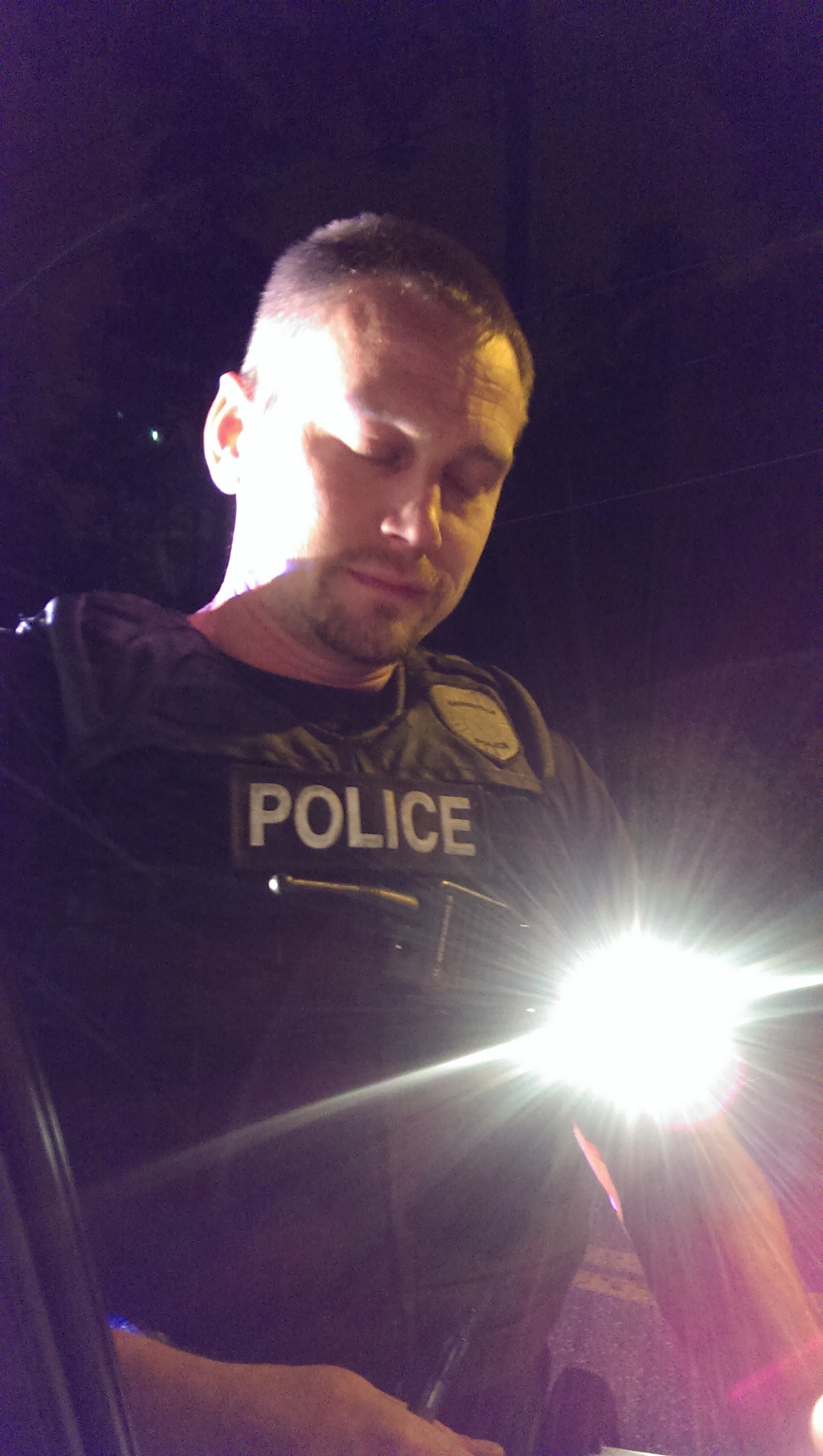
“Yes.” I did so. It wasn’t the greatest, as his eyes were closed, but under the circumstances I did not think it wise to ask to take another. Ofc. Owens was clearly having a bad night.

When I first saw Officer Charles Owens, he was sitting inside his police vehicle, parked in the Lloyd Clarke’s parking lot, apparently conferring with another officer in another police vehicle. They were both inside their vehicles, each with the driver’s window rolled down, the vehicles thus facing in opposite directions. I am not certain, but the other officer may have been a female, as it seems I remember seeing a ponytail.

When Ofc. Owens first noticed me, I was turning left on to 13th Street from 16th Avenue. I had been hauling heavy vanloads of farm equipment earlier in the day, from Gainesville to Micanopy, and now my van was empty, and much lighter. After all the farm transportation, I had taken a friend to dinner and then dropped him off at his home and stood in his carport talking with him for half an hour or so, and the entire time I watched mist coming down.

I was very tired, and traveling by myself, back to an empty house, a situation I had not found myself in, in decades. Due to the mist, when I pressed on the accelerator, the wet road caused a slight squeal from my tires. I did not veer from my carefully steered path, I did not speed, nor was there any other car in the intersection, or even anywhere near the intersection. At that hour on a Wednesday, the roads were practically empty.

Officer Owens’ car was the one pointed with its nose facing south, the direction in which I was traveling, so he immediately pulled out of the parking lot and followed me, his lights flashing. I pulled over as soon as I realized it was me he was following, and turned right, on to 10th Avenue.

I was then two blocks or so from home. I rolled down the window of my car after he approached my vehicle, and asked him, in what I thought was my nicest and most cooperative voice, what I could do for him. I was exhausted and getting divorced in two days, but I did my best to be polite.

The first thing he said to me was why was I so “hostile.” I told him I wasn’t feeling hostile in the slightest, but that I was very, very tired and just wanted to get home, and being a female driving across town, alone at 1 a.m., was not something I enjoyed. I was, however, annoyed, because I thought his stopping me was entirely unnecessary and a waste of valuable taxpayer resources.

I started to tell Ofc. Owens a couple of pertinent facts that might have affected his decision-making processes, such as the fact that I was being divorced in two days, by my husband of ten years, after almost dying from a brain tumor the previous April, a tumor which had been wrapped around my optic nerve and the major aorta in my brain and had been in that site for between 17 to 34 years, and had made me feel horrible for at least the prior 5 years. I was getting divorced, as far as I could tell, because my husband preferred me half-dead and didn’t like the fact that I was not in that state anymore, and actually wanted him to get off the couch once in a while.

“I don’t want to hear any of your personal information,” he said as soon as I said my first word on those topics. I complied, and did not insist to be heard.

I live at the corner of 8th Avenue and 15th Street, and I am well aware of the driving skills usually displayed on 13th Street. Careless driving is not what I do. I am an excellent driver, and the only accident on my record was one in which my then-teenaged daughter’s car was parked in the driveway of my home, and a drunken college student plowed into it, and into the tree next to the driveway, and sped off with such haste that the smell of burning rubber could be smelt for hours afterwards.

The insurance company told me that even though my car was unoccupied and parked, I was being charged with an at fault accident because the vehicle was in my name. I was told there was nothing I could do about it. I live in an extremely loud, noisy and “party” neighborhood, which I nonetheless love and tolerate because I like to be in the middle of town. Needless to say, I know the value of the police force and respect what they do highly. However, Ofc. Owens made a bad call. It happens. Everyone makes mistakes. One was made here. I was not driving carelessly. End of story.

3 Comments

Filed under humor, legal writing, mysterious, notes, science

The Poetry Teacher Feeds Me a Raisin, a poem

illustration the poetry teacher feeds me a raisin

The Poetry Teacher Feeds Me a Raisin

It feels like communion
She’s like a priestess
I’m sucking
on a round sweet gob
of sunlight
And I see her buying the raisins,
handing money
to the pale register girl
Her hands are strong
like my mother’s
She’s feeding me,
I’ve never had a teacher
feed me and earlier I wanted
to shrink down and crawl
into her pocket, her purse,
into the braided locks of her hair,
holding her fast
as if life depended on it,
and of course it does.
I have been touched
by the light and cannot
go back except
to make things sweet
like this fruit.

3 Comments

Filed under poetry

A 365 daily Challenge – Day 26

A 365 daily Challenge – Day 26.

Leave a comment

Filed under recommended reblogs

Walking Tour, a short story

illustration walking tour

Walking Tour

Kate — though she wished Hal wouldn’t work so hard — knew he wasn’t as bad as some; not like the ones who crashed on the couch in the lounge at 4 a.m., crawling home at seven to shower and change and get back in time to teach at eight. No, she and Hal had some social life; they were close to several of the other young married professors — they took turns hosting dinner parties, and sometimes on Fridays they all met for a few beers downtown. And, of course, she and Hal had always talked about taking real advantage of his academic calendar — short vacations during midterm breaks, escaping New Jersey for Maine or Vermont in the summer — though they hadn’t managed anything like that yet. They’d been married for four and a half years — their daughter, Rebecca, was two — but so far the only real vacation they’d ever had together was their honeymoon.

That was why, to celebrate their fifth wedding anniversary in July, Hal suggested they take a car trip through New England — just the two of them. Kate agreed to the idea, and her mother was willing to come up from Washington to stay with Rebecca — but, as the date of the trip got closer and closer, Hal became frustrated, even irritable, when Kate was unable, or unwilling, to make the smallest of decisions concerning the trip.

He brought home plenty of maps and guidebooks for them to go over together — but Kate found when she tried to read through the material, she got floaty and detached, incapable of linear thought. Hal would stare at her, his eyebrows raised in mild interrogation. “Sure, that sounds good,” she’d say, nodding in desperate agreement with whatever he had suggested.

Hal had always been the more methodical planner. Perhaps that was what was holding her back.

“Do you want to go on this trip, or not?” he asked her, at one point, sounding exasperated.

“Yes, yes, of course.” She looked up at a large cobweb draped over the window molding. One loose corner of the web waved in the air currents like a miniature flag. Damn this house, she thought. “You’ve read all the books. I’m sure whatever you decide on will be great.”

“Then I don’t want to hear any complaints,” Hal said.

“You won’t,” she said. “I have faith in your judgment.”

As it was, she could barely manage to pack. Her wardrobe was entirely inappropriate, she thought: her suits left over from work were too formal, but her everyday clothes made her look like just another suburban hausfrau.

The morning of the first day, as Hal backed out of the driveway, Kate’s mother held baby Rebecca up, flapping her tiny arm for her in a mock goodbye, the child herself oblivious to their departure. Kate waved goodbye back more vigorously than she had intended.

“She’ll be fine,” Hal said, smiling at her and patting her hand.

“Oh, I know,” Kate replied, shrugging. She hated to seem like a stereotypical mother, but she felt both annoyed and vaguely panicky.

The drive was easy, the traffic light. Kate worked on a piece of needlepoint she’d started while pregnant with Rebecca. The first scheduled stop was halfway through Connecticut — a small, formerly decaying town, adjacent to the state university, located in the middle of vast, uncultivated pasture. The house they were to sleep in was centuries old, though it, like the rest of the recently renovated buildings, looked brand new. Kate tried to imagine what this place had been like back when the house was built. Nothing much came to her — images of women in long, scratchy wool dresses, perhaps, similarly clothed children covered with prickly heat.

The owners of the bed-and-breakfast were pleasant enough. Husband and wife, gourmet vegetarians — new-age bodies thin and neat; limbs long and slow-moving; dark, bowl-shaped haircuts giving them an ascetic-Oriental look.

Even before the walking began, Kate was exhausted. Oh, she’d been low-energy for as long as she could remember, starting around puberty — but she’d been even more that way after the birth of their daughter. She craved feeling zippy, peppy, and enthusiastic as others craved chocolate, champagne, sex. She’d discovered, however, that the more she slept, the drabber and more leaden she became.

Kate had very little to say to Hal over dinner. At the historic tavern restaurant he’d chosen from the guidebooks, she looked enviously at the surrounding couples — coveting what seemed an easier and more satisfying intimacy than their own. The food was good, the ingredients fresh and dramatically prepared, but she wondered why he had picked this town. Their room at the bed-and-breakfast was clean and lovingly decorated — but something seemed to be missing. Of course she couldn’t possibly say anything to Hal. She had let him plan everything.

Moreover, she had the horrible sinking feeling, that she would never be any good at vacations. In her family, the appearance of tourism had always been something to be strictly avoided.

Vacationers, her parents said, always seemed such bores. Hal, on the other hand, seemed at ease in his role as traveler. She tried to relax, to copy his behavior, to see everything through his eyes, but it seemed an arduous task, barely worth the effort. Enjoying this sort of travel must be a genetic trait — in which case she was doomed.

The second day, they drove on to Boston. In the car, Kate began to feel so alienated from Hal — from even their physical surroundings — that she was frightened. Without the baby, she felt light as helium, and dizzy with unaccustomed altitude. Yet she was also glad to be rid of the child. At every opportunity, she looked into Hal’s eyes over and over again, waiting for him to reassure her, waiting for the comforting rush of affection to take hold and be returned. Upon checking in at the famous, 100-year-old hotel Hal had selected, they discovered in their room incongruous sixties shag carpet, faintly damp, faded bedspreads, and chipped Formica furniture. Only the bathroom was authentic, with its small, hexagonal white tiles, massive, pull-chain toilet, and stubby porcelain faucet-handles.

Again, she could reveal none of her discomfort to Hal. There were no excuses for her. It was true that, ever since she’d quit her job to stay home full-time with Rebecca, her wants and desires seemed less and less clear, less discernible — even to herself. Thus, she often found herself waiting for things to happen around her, griping when events didn’t happen at the right time or in the right sequence to suit her. Had she always been this way, she wondered? She fell asleep that night as abruptly and uneasily as though knocked over the head with a large hammer.

The next day — at least for the first hour or two — the walking tour of old Boston was successful. Kate loved the feel of the tidy old churches: the bare, wide-board floors, the quaint boxed-in pews, the high pulpits covered by conical sounding boards. She and Hal hiked all the way from their downtown hotel to the watery edge of the city. But the day grew sunnier and sunnier, hotter and hotter, until, after lunch, all she wanted to do was sleep.
“I’m getting tired,” she said. “How about going back to the hotel for a nap?”

“You can nap when we get home,” said Hal. “Napping wasn’t in my plan.” He smiled unforgivingly. “Next on our itinerary is the Battle of Bunker Hill memorial.”

“Oh,” she said, nodding her head resignedly.

They got lost on the way over, both of them confused by the number of bridges and interchanges, though Hal refused to pull into a gas station for directions. The neighborhoods they passed through grew more and more ominous-looking. Then Kate spotted the monument’s tower, which could be seen over the rooftops from several blocks away.

Standing in the small museum built next to the monument, Kate listened carefully to the guide’s lecture. Jostled by the other visitors, she nonetheless peered through dusty glass at a miniaturized tableau of the battle. She couldn’t believe it, but she even got choked up, reminded anew of the preposterous bravery of the untrained American farmers taking on the redcoats. Why, she hadn’t gotten emotional about that sort of thing since high school! Hoping no one saw, she wiped her teary eyes and felt like an imbecile.

Inside the darkness of the monument tower, even one loud-and-cocky school group of robust twelve-year-olds became red-faced and silent, panting during the steep climb. The odor of many thousands of perspiring bodies hung in the air like an almost-visible curtain. Still, upon reaching the top, Kate had to admit that the view — though rather claustrophobically viewed from between corroding iron bars set into tiny, deep-cut windows, the wide stone sills themselves further ornamented by large, multicolored wads of gum — was panoramic.

Hal’s entire vacation plan, Kate now realized, consisted of walking, walking, and walking. The next day, on their way west, out to the Berkshires, they stopped at a restored Shaker Village. Again, more miles to be traversed, through wet grassy fields and gaping wallows of mud. Kate’s sneakers were a disgrace. But she found she enjoyed touring the dormitory buildings: men on one floor, women and children on another. The sect’s emphasis on celibacy and the members’ resultant childlessness caused her a strange, unexpected envy. Why hadn’t she thought of that? No one to worry about but herself.

“What a wonderful idea!” she said to Hal, turning to face him, surrounded by the cots in the middle of the women’s dormitory — pretending she was joking — and they both laughed. Suddenly, she craved the hard, simple life that the narrow, rather lumpy Shaker cots suggested. One’s life decisions made by the elders, no questions asked. Unfortunately, toward the end of the tour Kate discovered that the last surviving Shaker community of elders had already decided: no more members admitted! Even so, she imagined what it would be like — being far away from Rebecca for the first time since her birth, it was almost as if the baby had never existed. Could Kate really forget her so easily? She concluded she could not, then felt absurdly guilty.

That night, spent in a lovely old mansion near Tanglewood, was no better than the rest. She feared the trip would be over before she figured out why she wasn’t enjoying it. Her conversations with Hal were horribly self-conscious, forced in a way that she’d never experienced before. At dinner, the two of them were the only ones in the hotel’s restaurant — the music festival hadn’t started yet — so the empty tables around them made the staleness of their words even more obvious to her. The waiter, however, hovered over them: there was, it seemed, an oversupply of waiters. She drank too much, and though they made love back in the hotel room, it was more out of a sense of not-to-be-missed opportunity than of passion.

The next morning, they started for home. Kate had a peculiar rotten feeling, formless and overwhelming like motion sickness. She thought of how much money they’d spent on the trip and how it had been wasted on her. She was incapable of appreciating anything! She resigned herself to going home feeling even more tired and depressed than when she’d left. In self-disgust, she rolled up her needlepoint and contemplated throwing it out the window. As she was drifting off into a light, disoriented sleep, just before they crossed over the Tappan Zee, Hal saw a highway sign that caught his eye — something he hadn’t planned. A scenic overlook called Wappingers Falls, located in the middle of a large state park. One last hike. Just what I need, Kate thought.

“Look it up in the guidebook,” he told her.

“It says it’s a big waterfall,” Kate said.

“No kidding,” Hal said sarcastically. His tone turned to one of reflection. “Wait, wait. Now I remember. I read about this one. It’s supposed to be really beautiful.” Still driving, he turned to her for a moment. “Don’t be such a wet blanket.”

Saying nothing, she slammed the guidebook closed, and was not at all surprised when he took the following exit. She considered waiting in the car while he hiked alone, but as they drove through the park, something in Hal’s face opened up as he hunted for a parking space — she seemed to remember that particular demeanor, his earnest expression from years ago, that one where he really looked her in the eye. A remarkably clean light of awareness shone out of his pupils, bewitching her utterly. So, giving him the benefit of the doubt, she walked up to the falls with him.

The march up the mountain made her calves cramp bitterly. She forgot about his eyes and regretted having come. She couldn’t decide which aspect of the vacation had been the worst. Deep in self-loathing, she did not speak at all on the trail. They passed several laughing groups on their way down, and she felt horribly conspicuous in her sullenness. She lagged farther and farther behind Hal, becoming irritated when he didn’t wait up for her. She rolled her eyes at the dark canopy of trees, shaking her head, and then Hal disappeared around a bend in the trail.
As she walked, alone now, the air changed, becoming eerily fragrant, sweet with the mysterious smell of growing things and dirt. Presently, she could hear the water rushing in the river, then she could glimpse through the trees the rapid, swirling current, the translucent shine of the mountain water. Breaking into a fast jog, she labored up the steep path to catch up with Hal. She walked rapidly, next to him, eyeing him surreptitiously, checking his face for the look she remembered she’d seen earlier, but it was gone. They went around another sharp curve, and then the trees opened up into a large clearing. There was a narrow stairway carved into the huge granite boulders in front of them.
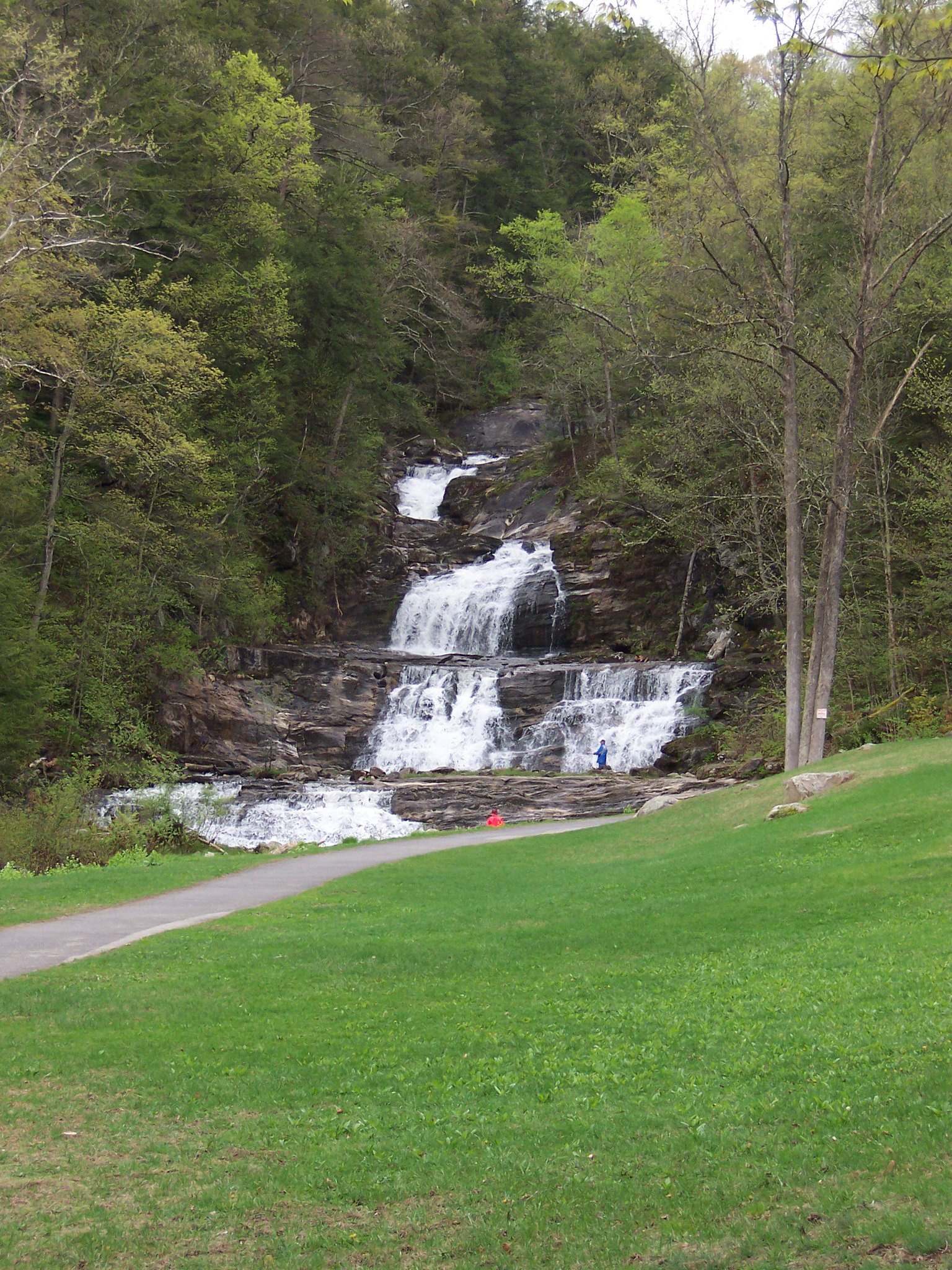
As she went down the stone steps, her view of the falls still blocked by trees, Hal held his hand out to steady her at the bottom. She stood gingerly on a patch of moss and raised her eyes to the sound of the water. The falls themselves almost made her stop breathing: high, jutting projections of rock; twisted, angular trees growing between the boulders; the surrounding sky bright blue and cloudless. There was something she’d never seen before in these rocks, in this moss, in the sight and spray-mist feel of this water. The falls bathed her face with a soft sigh of coolness — a breath of fresh air, moistened by God. She felt some sort of calcified anger snap in two, giving way inside her like a dry stick; with that, the merest bit of her accumulated, self-hating poisons began leaching out and away, and that was enough.

She had always been such a reluctant, grudging optimist — always, in the end, forced, against her will, to appreciate the universe, despite her tiredness, despite her crankiness. Kate wasn’t silly enough to believe she would be able to change her whole outlook overnight, but if she wanted it badly enough, she knew this moment could be the beginning of a new way of looking at the rest of her life. This — this rocky fall of water was somehow the truest thing she’d ever seen — dramatic, passionate, and dangerous — and it was demanding admiration from her. Whatever made this made me too, she thought. She stared at the exploding mass of water, the roaring noise soothing her like a baby.

Hal reached out and touched her arm. “So. Was this worth walking two miles?”

She turned to him, wondering at the smooth warmth of his palm, the slow gentleness of his voice. It was so seldom she and Hal were ever in sync. It was like he was a stranger most of the time — but not now. Perhaps this was also what had been missing. “Yes, it was worth it,” she said.

“Did you have a good time?” he asked her solemnly. “Was it a good vacation?”

“I did,” she said, and she squeezed his hand.

“Now, let’s go home to the kid,” he said, smiling as he turned away from the falls. She leaned forward and kissed him. “I actually missed her,” he sighed. Kate didn’t reply.

“Race you to the car,” she called, turning away from her husband and rising up the stairs, running as fast as she could down the angled mountain trail, moving easily towards home.

Leave a comment

Filed under short stories

desiderata, in french, hopefully an OK translation, not by me

illustration desiderata in french

Desiderata

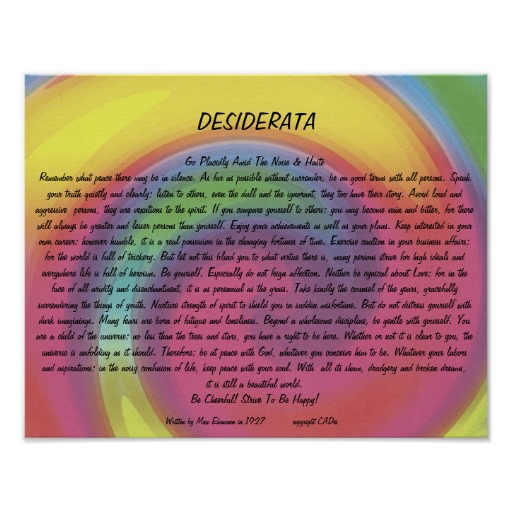
Aller tranquillement au milieu du bruit et la hâte et n’oubliez pas quelle paix il peut être dans le silence. Aussi loin que possible sans cession être en bons termes avec toutes les personnes. Parler de ta vérité calmement et clairement ; et écouter les autres, même le mat et l’ignorant ; ils ont aussi leur histoire. Éviter des personnes forts et agressifs, ils sont des déboires à l’esprit. Si vous comparez vous-même avec les autres, vous pouvez devenir vaniteux et amère ; pour toujours, il y aura une plus grande et la petite personnes que vous-même.
Profitez de vos réalisations ainsi que vos plans. Garder intéressés par votre propre carrière, si humble ; C’est une véritable possession dans les fortunes changeantes du temps. Faire preuve de prudence dans vos relations d’affaires; pour le monde est plein de fourberies. Mais cela laisse ne pas vous aveugler sur quel virtue est là; beaucoup de personnes recherchent de grands idéaux ; et partout la vie est pleine d’héroïsme.

Soyez vous-même. En particulier, ne pas feindre d’affection. Ni être cynique sur l’amour; pour face à l’aridité et le désenchantement, il est aussi vivace que l’herbe.

Prenez avec bonté le conseiller des années, remise gracieusement les choses de la jeunesse. Nourrir de force de l’esprit pour vous protéger d’infortune soudaine. Mais ne pas vous affliger avec dark imaginings. Beaucoup de craintes naissent de la fatigue et la solitude. Au-delà d’une discipline saine, soyez doux avec vous-même.

Vous êtes un enfant de l’univers, pas moins que les arbres et les étoiles ; vous avez le droit d’être ici. Et s’il est clair pour vous, sans doute, l’univers se déroule comme il se doit.

Par conséquent, être en paix avec Dieu, tout ce que vous lui faire concevez et quel que soit vos labeurs et aspirations, dans la bruyante confusion de la vie, maintenir la paix avec ton âme. Avec toutes ses trompe-l’œil, corvées et rêves brisés, c’est toujours un monde merveilleux. Être de bonne humeur. S’efforcer d’être heureux.

Max Ehrmann, (1927)

1 Comment

Filed under for children, health, humor, legal writing, mysterious, notes, poetry, prose poetry, recommended reblogs

Mockingbird (Mimus Polyglottos), a poem

illustration mockingbird mimus polyglottos

Mockingbird (Mimus Polyglottos)

I had to draw you in third grade —
a report on Florida, my home state then.
Looked in books, didn’t like the flatness,
lack of color, so sought you in the yard,
rewarded by sudden vocal flourish,

clean as the sun’s flaming disc
in the tropical sky. No one can
trap your beauty on paper. Graceful twists,
curious angled head, feather flutter soft.
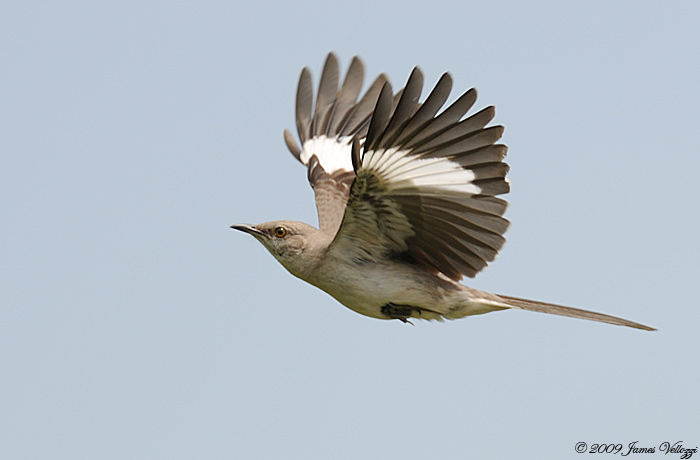
White stripe of wing. Sly copyist,

copycat, derivative virtuoso
elegantly arrayed in gray and white —
au fait like the nun who taught me,
her voice hung in the air like yours.
Secret messages from God.

I knew all birds once I knew you,
uberbird, condensed history of music,
your knowing lentil eye. You knew me.
Stared at me, saucy songster, head cocked,
more brilliant and beautiful than I would ever be.

A bird aptly chosen and laughing
for this land which also mocks us —
the sun’s burning rays, the leaden air,
the flood of migratory bodies from duller climes…
you are wiser, don’t have to travel

with your pearly gray and white, never
tiring slender leg and so
quick, quick on the wing.
Your song — who needs other birds,
you can do them all, I listen for you still.

Sing to me sister, brother, mother,
father, friend — you have my gratitude.
Take me away with you…
give me some of your wildness,
give me your voice, your bright eye.

You know what you like,
you can hear something once
and sing about it forever. Your music helped
when Mommy reeked of whiskey
and tried to snuggle in bed with me.

Where does an eight-year-old
learn to send that kind of love away?
I cried that night but you sang to me
in the morning. You watched me swing
from the holly tree, you were there

when everything happened,
you saw it all and sang your tunes,
gave me the comfort of lovely noise
to fill my head when all around was ugly.
You were nursemaid to my heart.

11 Comments

Filed under poetry

Ojai is the Chumash Word for Moon, a prose poem

illustration ojai is the chumash word for moon

Ojai Is the Chumash Word for Moon

1. When I See the Moon She Comes Back to Me

Everyone else has something good to tell. This is what I have. This is what she gave me. Even now I see my mother’s face, soft and drunk, pale and frightful, moving through the darkness, soaring over me as mysterious and unreachable as the moon. Her affection waxed and waned, never constant. When she’d had enough Scotch, she loved me, but the way she went about her mother-love, pulling at me with sorrowful, clumsy arms given unnatural strength by liquor, made my flesh wither under her touch.

2. Possessions

My mother and father lived in a solidly built house, outer walls nearly two feet thick, in the oldest and grandest neighborhood in their town. They lived where people like them had lived for hundreds of years. My father felt comfortable with his mahogany furniture, his linen upholstery, his hand-woven Orientals. He collected, among other things, antique, cut-crystal decanters. They were displayed in a case in the living room, unfilled, sparkling, sharply defined edges, here and there a tiny chip but that only added to their elderly charm. Things weren’t supposed to be new; he took satisfaction in the fact he’d inherited most of the contents of his house. His life, its outward details — wife, child, home, furniture, and car, standing in the community, salary, and immediate circle of peers — had functioned for many years like a brick wall, and he found himself hiding behind that wall even as it started getting chipped away.

3. Fathers and Mothers are Our First Lovers

My mother had skin like rose petals, eyes like a deer’s. Too needy for most men, she could not be promiscuous — she was not strong enough for that. There were times when she forgot to be sad, if only when some equally sad-eyed boy noticed her. If a boy loved her to the point of obsession, to the point of contemplating suicide, she imagined she might find the strength within herself to survive, but she eventually rejected all such suitors, only wanting those who were unattainable, as her father and later her husband, my own father, were. Remote, a source of funds and orders and criticism, the two closest men in her life approved of her external beauty but not her soul. They didn’t care what she wanted — they wanted her to be like all the other girls and women, to be beautiful and obedient and never talk to dead Indian spirits. They broke her will; she broke their hearts. Distance was how they both managed her. If she could have hardened herself on the inside, if she could have seen either one of them as just another man she could conquer with her flesh, it would have helped.

4. Intimacy

My father and my mother were having sex one night, and my mother was on top of him and she got that silly, dreamy-eyed look, like when she read a romance novel. “Remember when you were little?” she said, still sitting on top of him, him inside her.

“What do you mean?” he asked. He and my mother were aliens to each other anymore.

“Don’t you remember sitting on your mother’s lap, in her arms?”

“My mother?” he asked.

“Wasn’t it good to feel her arms around you, as a little boy?”

He was inside her still and he felt his penis start to shrivel. His mother! What had she got to do with anything? “What on earth are you talking about?” he asked.

“Your mother, holding you in her arms, when you were a tiny little boy. It must have felt so good.”

“You’re sick,” he said, pushing her off him.

“Sick?” she said. “What do you mean, sick?”

“Asking me about my mother at a time like that, it’s sick.”

She rolled over and was silent, and then he heard her start to cry.

“Oh, Christ,” he said. “I’m going to sleep downstairs.”

“No,” she said, bolting out of the bed. “I’ll sleep downstairs.”

“That’s it, after this I don’t owe you anything,” he said to the ceiling after she was gone.

5. The Coastal Mountains Cut Off the Sight of the Sea

My mother was sent away at 14 to boarding school in Ojai, where she refused to eat. She wanted to turn back the years already. The moon drew her, she felt herself drawn to its inaccessible height, its untouched opalescent skin. Looking back as if from a far distance, she mourned her own childhood while it was still happening. Her eyes rolled back in her skull, the whites looking like two small moons. She howled at the moon without making a sound. Though she began menstruating at age 9, for years she shaved her pubic hair off in secret with an old, dull razor because she did not want to become a woman. Dreaming of the ocean, hidden behind the coastal mountains, she wanted only to be clean. She felt how the spirit of a Chumash Indian warrior possessed her. As she grew thinner, harder against the world, she rejoiced that there would be less of her to feel pain, less of her to bury. The other girls at school were as mysterious to her as stars. They sparkled while she could only reflect sadness. Her clothes hung on her bones and she was sent to a psychiatrist — that very night the moon was full and blue. They don’t understand me at all, she thought. In her own way, she was a visionary, a trend-setter. Doctors didn’t have a name, then, for what was wrong with her.

6. Anger

Finally, after 15 years of marriage the wall between my mother and my father fell. Then my mother wanted to figure out who she was. She wanted her own personal growth; she wasn’t able to focus on anything else. She needed space and time. At first, it was only the beginning of the process, and then it became the end. She couldn’t suffer any more, so she killed those feelings that brought her pain. She didn’t want to try to sort them out just yet, maybe not ever. In the end my mother’s feelings for my father were dead, gone. She didn’t know where they went.

7. She Owed Me that Much, Didn’t She?

She and my father lost their virginity with each other. Much later, when I knew her, she was memorable for simple things: her rose garden and her Scotch & water, her menthol cigarettes and her Pucci nightgowns, her ladylike hands and her A-cup breasts, her bitterness, her resignation, her unending string of sentimental, alcoholic boyfriends. She taught me how not to be. How not to live. A psychic told me she was my soul-mate, that my heart had been broken on the day I was born, that first hazy time I looked into her eyes and saw nothing there for me. One normal thing I remember is hanging clothes out to dry with her in the backyard when the dryer was broken. Once, she even took me out to the movies. Darker engrams always swamp whatever happy little memory-boat I manage to stow away in — like when she drove drunk for the umpteenth time and hit a kid on a bicycle, breaking his arm. I remember protecting her from the police, making sure she wouldn’t end up in jail, but later coldly stealing money from her wallet, cigarettes from her purse, clothes from her closet. In the end, she drank too much, and that killed her.

8. Madness

Toward the end, my mother said she was on fire from the neck down. Her arms and legs felt like they were glowing, orange-red, molten. But her head felt like a block of ice. She was emotionally or spiritually paralyzed, and worried about whether the condition was permanent. She felt like the nerves from her head down to her body were cut, and she didn’t know if they would ever grow back.

Right before the end, she said she could not distinguish life from dreams — she slept little, ate even less. She didn’t feel mad, she felt terribly, irrevocably sane. Everywhere she walked the ground seemed on the verge of opening up into blackness, into fire. If only she could go mad, she said. When they found her cold and stiff on the living room floor, she wore nothing but blue nylon panties and a wristwatch.

Leave a comment

Filed under prose poetry