Category Archives: prose poetry

Soon After My College Graduation, a novel fragment

illustration soon after my college graduation

Soon After My College Graduation, a novel fragment

Soon after my college graduation, I became engaged to Harold.  I’d known him since freshman year; we had dated casually until my senior year, when he watched me perform with the modern dance ensemble and fell in love with the way I moved across the stage in my clingy leotard and filmy skirts.  Everyone in the family adored him.  My father, who never learned to drive a car himself, let Frank drive our very first car home from the dealer.  Though I was happy about the engagement, I wasn’t in a rush to marry.  I wanted to work for a few years, get a taste of the world before settling down at home with a brood.  My parents were skeptical, but they didn’t make a fuss.  They knew I wanted a big family, at least six.

Harold was very good-looking:  strong chin, auburn hair, lean and athletic torso.  We were engaged, so it was the usual custom to sleep together.  His touch was delicate, his hands smooth and lovely.  It was a peaceful, dreamy experience, being with him.  He gave me a pear-shaped blue diamond set in platinum — I wore it and real silk stockings to the office every day.  My family was just middle class, but people thought I was rich.  Nobody knew my father got the stockings free as part of his job at the patent office.  In those days my hair was dark brown, cut in a short pageboy, draped gracefully over my forehead and curled at the ends.  I looked good in simple tailored skirts; my legs were long and well-formed from all that dancing.  Of course the stockings were a plus!

It was about a year into the engagement to Harold that I happened to work with the same young lawyer on several complicated adoptions, right in a row — Robert was Italian, short and bald, and his suits were nicely cut though threadbare.  Something about the confidence in his fluid voice grabbed my attention; one evening after work we met for a drink.  He wasn’t classically handsome, but he had bright, lively features and a charming way with funny stories.  That night, over a pitcher of Rob Roys, he confided to me that he was leaving the Department after the first of the year.  He had an office and secretary all lined up, and could hardly wait to get into practice on his own.  We ordered another pitcher of drinks to celebrate his daring move.

I suppose my big mistake was letting him take me out to dinner, too.  I was drunk:  not so drunk I didn’t know what was happening, just so drunk that I didn’t much care.  Robert touched my cheek, tucked a stray lock of hair behind my ear, then closed his eyes and sighed.  I was all over him in a second — he kept saying, are you sure, are you sure?  As I unzipped his trousers, he asked, what about Harold?  I said, I don’t owe him anything.  What I had then with Robert was neither peaceful nor dreamy, but a jolt of electricity that kept my nerves humming for hours.  Afterward, I held my breath for ten days, then kept right on holding it when my “friend” never showed up.  I started having trouble sleeping.  I was all mixed up.  There was no one I could talk to.

See, if I married Robert and the kid looked WASP, no big problem.  But if I married Harold and the kid came out looking Italian, what then?  I went with the easiest lie.  Does this seem terribly evil?  I had no real alternative at the time.  Now, I suppose I’d have an abortion and be done with it.  It’s true that I felt a little less awful as time passed and Robert and I had three more children who resembled their father, but I was never entirely certain about Robert Junior’s pedigree — depending on the time of day and the season he had the look about him of both men.

2 Comments

Filed under health, legal writing, mysterious, prose poetry, science, short stories

twelve songs for a broken ankle, a poem

twelve songs for a broken ankle, a poem.

Leave a comment

Filed under health, mysterious, poetry, prose poetry

I was thirteen the first time I had to lie to the police to protect someone I loved, a short story

I was thirteen the first time I had to lie to the police to protect someone I loved, a short story.

Leave a comment

Filed under health, legal writing, mysterious, notes, prose poetry, science, short stories

I was thirteen the first time I had to lie to the police to protect someone I loved, a short story

illustration mom hit the boy on the bike

I was Thirteen the First Time I Had to Lie to the Police to Protect Someone I Loved, a short story

I was thirteen, in my first year of high school, and one afternoon I was home watching TV by myself while my mother went to pick up my little brother from nursery school. The doorbell rang: a police officer stood outside, tall and broad and scary. He had gleaming handcuffs and an oily looking gun buckled to his belt; a long black stick with ominous scuffmarks hung at his side. “Your mother’s okay, but she’s been in an accident,” he said. Less than an hour ago I’d seen the way her whole body swayed as she went out the door. Her empty glass was sitting right behind me in the kitchen, unrinsed and still reeking of Scotch.

Even now I see my mother’s face, soft and drunk, pale and frightful, moving through the darkness, soaring over me as mysterious and unreachable as the moon. Her affection waxed and waned, never constant. When she’d had enough to drink, she loved me, but the way she went about her mother love, pulling at me with sorrowful, clumsy arms given unnatural strength by liquor, made my flesh wither under her touch.

“She hit a boy on a bicycle,” the policeman said. “Do you know if she’s been drinking?” he asked. He shifted his weight from one leg to both legs evenly, spread his feet wider on the cement walkway and moved his arms from his sides to his belly, holding his hands together down low at his belt.

“No,” I answered the policeman, looking unflinchingly into his eyes, which was excruciating but imperative, I knew, if I wanted him to believe me. “She hasn’t been drinking.”

My mother had skin like rose petals, eyes like a fawn’s. There were the rare times when she forgot to be sad, if only when some equally sad eyed man noticed her. If a man loved her to the point of obsession, to the point of contemplating suicide, she imagined she might find the strength within herself to survive, but she eventually rejected all such suitors, wanting only those who were hard nosed and cold blooded, as her father and, later, her husbands were. Remote, a source of funds and orders and criticism, the closest men in her life approved of her external beauty but not her soul. They didn’t care what she wanted: they wanted her to be like all the other girls and women, to be beautiful and obedient. They broke her will; she broke their hearts.

She was memorable for simple things: her rose garden and her Scotch and water, her menthol cigarettes and her Pucci nightgowns, her ladylike hands and her A cup breasts, her bitterness, her resignation, her unending string of sentimental, alcoholic boyfriends. She taught me how not to be. How not to live. A psychic once told me she was my one true soul mate in this life and that my heart had been broken the day I was born, that first hazy time I looked into her eyes and saw nothing there for me. One normal thing I remember is hanging clothes out to dry with her in the backyard when the dryer was broken. Once, she even took me out to the movies.

“Are you sure she’s not drunk?” the policeman said. His face was a smooth blank, revealing nothing, but then so was mine. “She’s acting pretty out of it.”

“She gets that way whenever she’s really upset,” I said.

“We need you to come take care of your brother,” he said. “While we decide what to do.”

The policeman herded me into his car, and we drove to the place Mom had the accident. They’d already taken the boy away in an ambulance; all that remained was his bright yellow bicycle, its frame horribly crooked, its front wheel bent almost in half, sprawled on the ground in front of my mother’s car, a powder blue Cutlass Supreme. I glanced offhand at the front of the car, afraid to look too long, afraid the policemen would be able to tell something from the way I acted, but I didn’t notice dents or blood or anything. Even without that, the bike, obviously brand new before the wreck, was as frightening as a dead body. Mom was sitting in the back of another patrol car, and her eyes were red, her face was wet.

My three year old brother sat beside her, and I could tell he hadn’t cried yet, but I could tell when he did it was going to last a very long time. Then I wanted to tell the police she was drunk, yes, she was drunk today and every single afternoon of my life, but the way she looked — her beautiful hands trembling as she smoked — temporarily severed the connection between my conscience and my voicebox. I couldn’t talk at all, because I knew I’d cry. I’d protect her from the police, make sure she wouldn’t end up in jail, but later, I would coldly steal money from her wallet, cigarettes from her purse, clothes from her closet. In the end, the boy on the bike died, and she died, too.

Toward the end, my mother said she was on fire from the neck down. Her arms and legs felt like they were glowing, orange red, molten. But her head felt like a block of ice. She was emotionally or spiritually paralyzed, she said, and worried about whether the condition was permanent. She felt like the nerves from her head down to her body were cut, and she didn’t know if they would ever grow back.

Right before the end, she said she could not distinguish life from dreams; she slept little, ate even less. She didn’t feel mad, she felt terribly, irrevocably sane. Everywhere she walked the ground seemed on the verge of opening up into blackness, into fire. If only she could go mad, she said. When I found her cold and stiff on the living room floor, she wore nothing but blue nylon panties and her white gold wristwatch, given to her by her own mother in 1958.

A watch which is in my jewelry box, upstairs, right this second, and which I wore to the Palm Sunday service, yesterday, at Holy Faith Catholic Church. I took Communion from Father John, even though I am not now, and have never been, and never will be, officially a Catholic. My friend Clyde, my dear friend, mentor, and fellow lawyer, told me that he thought I would still be eligible for Heaven, regardless of what the Catholic Church, as an institution, might determine.

Because of all this, and a couple of other things which I won’t bother to mention here, I had to hold myself very still, and open my eyes a bit wide, during the reading of Jesus’s betrayal in the Garden of Gethsemane in order not to allow the fucking tears to drop out of my eyes. Yes, I am a liar. So sue me. Good luck!

11 Comments

Filed under legal writing, mysterious, prose poetry, short stories

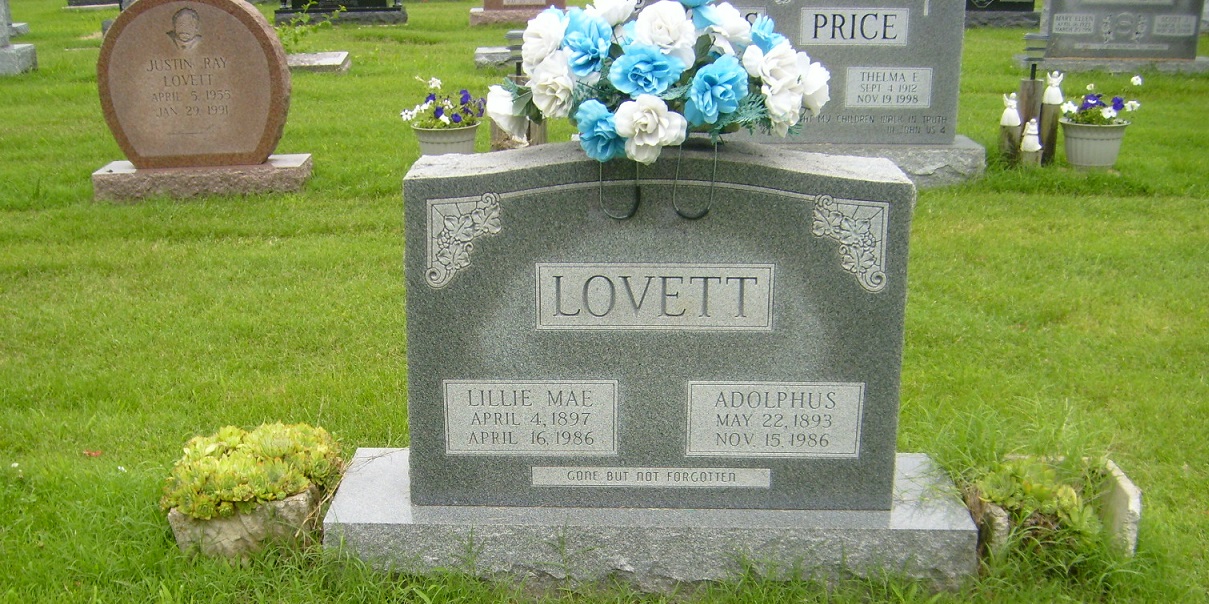
Lillie Mae Lovett, a prose poem

Image

Lillie Mae was the first person, other than her mother, Ella remembered being in love with.  She — Lillie Mae — chewed gum, had a gold front tooth, wore long, dark auburn wigs, bright and warm against her dark brown skin.  She — Ella — buried her nose in Lillie Mae’s neck, held up high in her arms.  Heard the muted snapping of the gum in Lillie Mae’s mouth.  Lillie Mae could get Ella, a picky eater, to eat when no one else could.  For Lillie Mae, Ella would open her jaws for the spoon.

Leave a comment

Filed under for children, health, mysterious, notes, prose poetry, short stories

The Healer and I, a prose poem

Image

The Healer and I

Fay, the healer and I, the subject, both consult my body in its entirety.  Fay directs me to examine the sensations within this body, the instrument of change I have placed upon her table.  There is first the feeling of water dripping, ice melting, inside the body.  The dripping is insistent, patient, slow.  The water is flowing from the head to the feet, and from the feet down into the earth itself.

What is melting the ice?  Light, and heat, from a source outside the body.  The ice melts, bringing forgotten memories & feelings.  A vision of mountaintops, sheathed in ice, but below the ice, green plants wait, alive, waiting to raise their heads, once the ice is gone.  Luxuriant jungle foliage, frozen water holding it down.  The ice melts, the water is freed — the water nourishes the plants growing on the mountainside.  The water has been held in stasis, unable to feed the growth of the plants, but now it is melting.

The water is itself pure & clear, it does not care about having been frozen, it exists only in this moment, the moment of flow.  The water is good, the force melting it is good, the plants are good, the mountain is good — there is no bad thing, only cycles of stasis & flux.  We, Fay and I, are in a period of change.

The spine is specifically consulted, the spine feels stirrings it has not felt for some time.  “Desolation is a file, and the endurance of darkness is preparation for great light.”  (St. John of the Cross.)  The frozen water has had its purpose — there can be no journey without rest.  Soon, the ice will melt altogether.  Yet the spine quivers with some unexamined tension, apart from the melting of the ice.

A sensation of another presence, another entity, squirming under the touch, ticklish, evading….

Leave a comment

Filed under health, mysterious, prose poetry, science

desiderata, in french, hopefully an OK translation, not by me

illustration desiderata in french

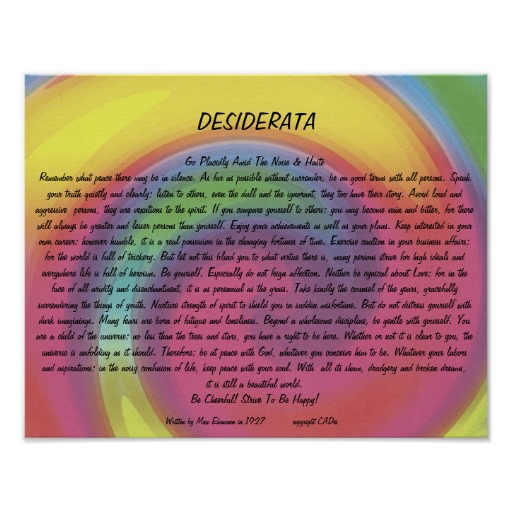
Desiderata

Aller tranquillement au milieu du bruit et la hâte et n’oubliez pas quelle paix il peut être dans le silence. Aussi loin que possible sans cession être en bons termes avec toutes les personnes. Parler de ta vérité calmement et clairement ; et écouter les autres, même le mat et l’ignorant ; ils ont aussi leur histoire. Éviter des personnes forts et agressifs, ils sont des déboires à l’esprit. Si vous comparez vous-même avec les autres, vous pouvez devenir vaniteux et amère ; pour toujours, il y aura une plus grande et la petite personnes que vous-même.
Profitez de vos réalisations ainsi que vos plans. Garder intéressés par votre propre carrière, si humble ; C’est une véritable possession dans les fortunes changeantes du temps. Faire preuve de prudence dans vos relations d’affaires; pour le monde est plein de fourberies. Mais cela laisse ne pas vous aveugler sur quel virtue est là; beaucoup de personnes recherchent de grands idéaux ; et partout la vie est pleine d’héroïsme.

Soyez vous-même. En particulier, ne pas feindre d’affection. Ni être cynique sur l’amour; pour face à l’aridité et le désenchantement, il est aussi vivace que l’herbe.

Prenez avec bonté le conseiller des années, remise gracieusement les choses de la jeunesse. Nourrir de force de l’esprit pour vous protéger d’infortune soudaine. Mais ne pas vous affliger avec dark imaginings. Beaucoup de craintes naissent de la fatigue et la solitude. Au-delà d’une discipline saine, soyez doux avec vous-même.

Vous êtes un enfant de l’univers, pas moins que les arbres et les étoiles ; vous avez le droit d’être ici. Et s’il est clair pour vous, sans doute, l’univers se déroule comme il se doit.

Par conséquent, être en paix avec Dieu, tout ce que vous lui faire concevez et quel que soit vos labeurs et aspirations, dans la bruyante confusion de la vie, maintenir la paix avec ton âme. Avec toutes ses trompe-l’œil, corvées et rêves brisés, c’est toujours un monde merveilleux. Être de bonne humeur. S’efforcer d’être heureux.

Max Ehrmann, (1927)

1 Comment

Filed under for children, health, humor, legal writing, mysterious, notes, poetry, prose poetry, recommended reblogs

Ojai is the Chumash Word for Moon, a prose poem

illustration ojai is the chumash word for moon

Ojai Is the Chumash Word for Moon

1. When I See the Moon She Comes Back to Me

Everyone else has something good to tell. This is what I have. This is what she gave me. Even now I see my mother’s face, soft and drunk, pale and frightful, moving through the darkness, soaring over me as mysterious and unreachable as the moon. Her affection waxed and waned, never constant. When she’d had enough Scotch, she loved me, but the way she went about her mother-love, pulling at me with sorrowful, clumsy arms given unnatural strength by liquor, made my flesh wither under her touch.

2. Possessions

My mother and father lived in a solidly built house, outer walls nearly two feet thick, in the oldest and grandest neighborhood in their town. They lived where people like them had lived for hundreds of years. My father felt comfortable with his mahogany furniture, his linen upholstery, his hand-woven Orientals. He collected, among other things, antique, cut-crystal decanters. They were displayed in a case in the living room, unfilled, sparkling, sharply defined edges, here and there a tiny chip but that only added to their elderly charm. Things weren’t supposed to be new; he took satisfaction in the fact he’d inherited most of the contents of his house. His life, its outward details — wife, child, home, furniture, and car, standing in the community, salary, and immediate circle of peers — had functioned for many years like a brick wall, and he found himself hiding behind that wall even as it started getting chipped away.

3. Fathers and Mothers are Our First Lovers

My mother had skin like rose petals, eyes like a deer’s. Too needy for most men, she could not be promiscuous — she was not strong enough for that. There were times when she forgot to be sad, if only when some equally sad-eyed boy noticed her. If a boy loved her to the point of obsession, to the point of contemplating suicide, she imagined she might find the strength within herself to survive, but she eventually rejected all such suitors, only wanting those who were unattainable, as her father and later her husband, my own father, were. Remote, a source of funds and orders and criticism, the two closest men in her life approved of her external beauty but not her soul. They didn’t care what she wanted — they wanted her to be like all the other girls and women, to be beautiful and obedient and never talk to dead Indian spirits. They broke her will; she broke their hearts. Distance was how they both managed her. If she could have hardened herself on the inside, if she could have seen either one of them as just another man she could conquer with her flesh, it would have helped.

4. Intimacy

My father and my mother were having sex one night, and my mother was on top of him and she got that silly, dreamy-eyed look, like when she read a romance novel. “Remember when you were little?” she said, still sitting on top of him, him inside her.

“What do you mean?” he asked. He and my mother were aliens to each other anymore.

“Don’t you remember sitting on your mother’s lap, in her arms?”

“My mother?” he asked.

“Wasn’t it good to feel her arms around you, as a little boy?”

He was inside her still and he felt his penis start to shrivel. His mother! What had she got to do with anything? “What on earth are you talking about?” he asked.

“Your mother, holding you in her arms, when you were a tiny little boy. It must have felt so good.”

“You’re sick,” he said, pushing her off him.

“Sick?” she said. “What do you mean, sick?”

“Asking me about my mother at a time like that, it’s sick.”

She rolled over and was silent, and then he heard her start to cry.

“Oh, Christ,” he said. “I’m going to sleep downstairs.”

“No,” she said, bolting out of the bed. “I’ll sleep downstairs.”

“That’s it, after this I don’t owe you anything,” he said to the ceiling after she was gone.

5. The Coastal Mountains Cut Off the Sight of the Sea

My mother was sent away at 14 to boarding school in Ojai, where she refused to eat. She wanted to turn back the years already. The moon drew her, she felt herself drawn to its inaccessible height, its untouched opalescent skin. Looking back as if from a far distance, she mourned her own childhood while it was still happening. Her eyes rolled back in her skull, the whites looking like two small moons. She howled at the moon without making a sound. Though she began menstruating at age 9, for years she shaved her pubic hair off in secret with an old, dull razor because she did not want to become a woman. Dreaming of the ocean, hidden behind the coastal mountains, she wanted only to be clean. She felt how the spirit of a Chumash Indian warrior possessed her. As she grew thinner, harder against the world, she rejoiced that there would be less of her to feel pain, less of her to bury. The other girls at school were as mysterious to her as stars. They sparkled while she could only reflect sadness. Her clothes hung on her bones and she was sent to a psychiatrist — that very night the moon was full and blue. They don’t understand me at all, she thought. In her own way, she was a visionary, a trend-setter. Doctors didn’t have a name, then, for what was wrong with her.

6. Anger

Finally, after 15 years of marriage the wall between my mother and my father fell. Then my mother wanted to figure out who she was. She wanted her own personal growth; she wasn’t able to focus on anything else. She needed space and time. At first, it was only the beginning of the process, and then it became the end. She couldn’t suffer any more, so she killed those feelings that brought her pain. She didn’t want to try to sort them out just yet, maybe not ever. In the end my mother’s feelings for my father were dead, gone. She didn’t know where they went.

7. She Owed Me that Much, Didn’t She?

She and my father lost their virginity with each other. Much later, when I knew her, she was memorable for simple things: her rose garden and her Scotch & water, her menthol cigarettes and her Pucci nightgowns, her ladylike hands and her A-cup breasts, her bitterness, her resignation, her unending string of sentimental, alcoholic boyfriends. She taught me how not to be. How not to live. A psychic told me she was my soul-mate, that my heart had been broken on the day I was born, that first hazy time I looked into her eyes and saw nothing there for me. One normal thing I remember is hanging clothes out to dry with her in the backyard when the dryer was broken. Once, she even took me out to the movies. Darker engrams always swamp whatever happy little memory-boat I manage to stow away in — like when she drove drunk for the umpteenth time and hit a kid on a bicycle, breaking his arm. I remember protecting her from the police, making sure she wouldn’t end up in jail, but later coldly stealing money from her wallet, cigarettes from her purse, clothes from her closet. In the end, she drank too much, and that killed her.

8. Madness

Toward the end, my mother said she was on fire from the neck down. Her arms and legs felt like they were glowing, orange-red, molten. But her head felt like a block of ice. She was emotionally or spiritually paralyzed, and worried about whether the condition was permanent. She felt like the nerves from her head down to her body were cut, and she didn’t know if they would ever grow back.

Right before the end, she said she could not distinguish life from dreams — she slept little, ate even less. She didn’t feel mad, she felt terribly, irrevocably sane. Everywhere she walked the ground seemed on the verge of opening up into blackness, into fire. If only she could go mad, she said. When they found her cold and stiff on the living room floor, she wore nothing but blue nylon panties and a wristwatch.

Leave a comment

Filed under prose poetry

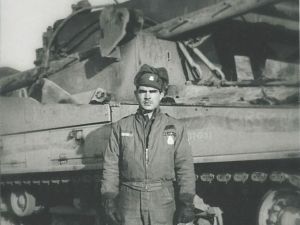
Jack, the Triple War Veteran, a nonfiction

illustration triple war veteran

Jack, the Triple War Veteran, a nonfiction

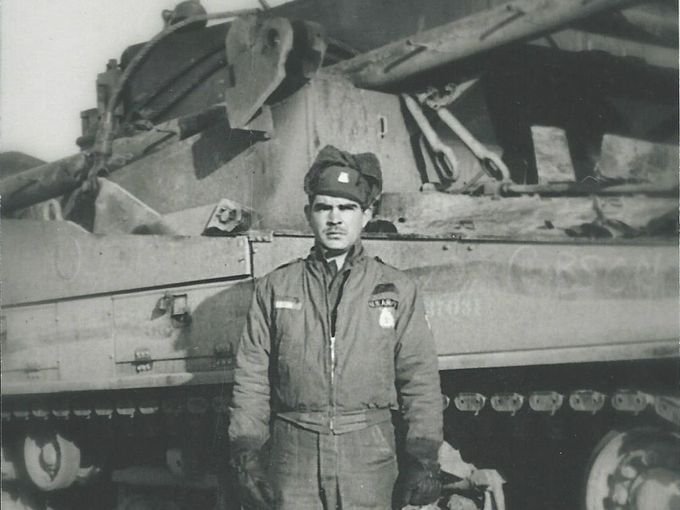
I met Jack, the 91-year-old, 52-years-of-service-including-3-wars, Army veteran on May 31st, 2013, approximately two months after I “woke up” from what was [then] my life, when I went to go fill my mom-mobile (white minivan) with mid-grade gasoline products (it may be only a mom-mobile, but i have a NEED FOR SPEED) at the Gate convenience store/gas station two blocks or so from my house.  I saw him sitting over by the vacuum/air/water station, on the round, concrete base of a streetlamp, his sleek, black, wheeled walker/chair thingie so piled up with odds and ends of clothes, shoes, and bags of snacks that it looked more like a shopping cart from across the parking lot.  His hair and beard were striking:  long, silvery white, shiny and silky and clean.  He looked like a very trim, fit Santa Claus, and when I first saw him, I would never have guessed he was 91 years old.  I approached him because I am what some people call a “bleeding heart liberal,” that is, my heart sort of sags and melts when I am confronted with people having needs that, to them, loom insolvable, and in actuality can be solved with a couple of $5 or $10 bills.

“Sir,” I said, “I don’t want to offend you in any way, but do you need anything?  Can I do anything for you?  Anything at all?  Do you need a few bucks, maybe?”

“Honey,” he said.  “I’ve been saving my money all my life!”  He took his wallet out, showed me a bunch of folded bills, and pulled a big stack of quarters out of his shorts’ pocket.  Jack was born in West Virgina, called himself a good, old hillbilly.

“Jack’s a great name,” I said.  “One of my grandpas was named Jack.”

“They named me after the dog!” he said.

“Well, they must have loved that dog,” I said.  “It must have been a terrific dog!”

“They still named me after the dog,” he said.  I have named pets after people, and wanted to do the reverse, just never had the actual opportunity.  (Wait for it!)

“I went to West Virginia once,” I said.  “I was in Morgantown.”

“The University of West Virginia!” he said.

“I know, it’s a beautiful town,” I said.  “And the state is beautiful, all those green hills.”

Turns out, he’s hanging out at the convenience store to get away from his daughter.  “She wants me to be the child, and her to be the parent, now,” he said.  “I’m too old for that!”

“I hear you,” I said.  “Does she know where you are?”

“I don’t really want her to,” he said.  “She lives right down the street, in a house I bought her back in 1972.”

He named his first rifle Miss Betty….

He was with Patton in N. Africa, at just 18 yrs. old, he was for a brief time Patton’s assistant?  Patton’s army was chasing Rommel, he and Jack started arguing over which way Rommel should to go; they disagreed (he & Patton) but Jack turned out to be right.  In a rage, Patton grabbed his (Jack’s) rifle once & shot into the air with it.  Yes, I could see General Patton doing such a thing.  Hahaha.

His daughter, whom he is on the lam from, is nicknamed BooBoo:  she got that nickname because as a baby she’d hide behind cabinets, furniture, poke her head out & say Boo, Daddy, Boo!

He is not married now, he likes it that way, nobody telling him what to do.

When I told him how nice he looked, how he didn’t look 91 at all:  “I take care of myself!  I’ve got to!  People say I’m a loner, but it’s three of us:  me, myself and I.”

God’s on his right shoulder, sometimes God tells him things, what to do or not to do:  sometimes he doesn’t listen, does what he wants, not what God says.  Later, he hears God saying, I told you so.  God has blessed him.  Every time we shook hands, me trying to exit stage right because my own 15 year old BooBoo was at home waiting for me to get back, he said, “God bless you,” and I said, thank you so much.  His eyes, the pale clear blue of a child’s, the twinkle of a child’s, the mischievous, rascally soul shining out of them.  But a good, good man.  Stationed all over the world and the United States of America.  The state of Florida was the site of his last posting.  He got misty-eyed thinking about one of his predeceased children, another daughter, however, he did not mention her name, and because of aforementioned misty-eyed-ness, I did not ask.

They once had a terrible episode of anthrax on the farm, when he was a child?  The cow had to get shots from the vet, they couldn’t use the cow’s milk for 6 weeks, then it was OK.  That cow gave so much milk, she had to be milked three times a day, not just two.

He wore dog tags, wouldn’t let me look at them:  “the last person that sees these is the one who’s supposed to bury me.”

“Well, I certainly don’t want to be the last to see them, then,” I said.

A student buying beer stopped & handed him a tall cold water bottle.  Jack thanked the boy warmly, saying “God bless you,” then after the boy walked off, he handed me the bottle.

“Aren’t you going to need this?” I asked him, concerned.

“I’ve got everything I need right here,” he said, pointing to his loaded “sulky,” a plastic grocery bag hanging:  was that the water?  “Besides,” he said, “that’s too cold.  And besides, I really like beer.”

“But you might need this water later,” I protested.

“Look,” said Jack, “he gave it to me, I’m giving it to you.  I’m just in the middle.”  I had to accept, gracefully, so I did, but I still felt a bit guilty.  The gift was Jack’s, but he wouldn’t keep it, he had to pass it along to me.

The store clerk, a young African American lad, came out to check on us; I think he wanted to make sure I wasn’t endangering Jack.  Jack handed him a huge pile of quarters, asked if he’d bring him out some beer.

“What kind?” the young man asked.

“O.P.,” Jack answered.

The clerk was confused.  “What’s that?” he said?

“Other people’s,” laughed Jack.

“I think he means it really doesn’t matter what kind of beer you bring him,” I said to the young man.  So he went inside with the money, came back out with a boxed six-pack & Jack’s excess change.

A woman, with a hard-lived look, came over to talk to us.  She knew Jack already, addressed him by name.  She was also a veteran, Operation Desert Storm.  She asked me if I could spare some gas money.  “It’s the end of the month,” she explained, “and I’m coming up short.  I just have to make it a few more days.”

“Sure,” I said, relieved that I could at least give her something, fulfill the impulse that had brought me over to Jack.  I went to my purse, grabbed a ten dollar bill.  While I was doing that, I saw Jack getting his money out to give her some, too.  He brought out a fiver.  Jack and I handed her the money, she shook my hand & thanked us both, and went to pump her gas.

Jack was dressed like a cool surfer guy; shorts with a nice braided belt, no shirt, his dog tag necklace, a pinky ring carved out of some sort of jade on his right hand, a couple of funky/hipster/hippy bracelets on his left wrist.  Quite fashionable looking, and I couldn’t get over the condition of his hair; silky & clean & shiny & sparkling silver, and the same with the beard, it grew to a natural point just below his breastbone.  The only long beard I’ve ever seen that looked beautiful!  His skin was amazingly smooth & healthy looking, considering the amount of sun exposure he must’ve seen!  I mean, he was 91 and he had very little sun damage, not many wrinkles, though of course a bit of sagging around the jowls.  No frown lines!  His only physical flaw was some missing teeth; it was apparent he could have had dentures or a bridge if he’d wanted them, but I think he was more comfortable without.

When I was leaving, I blew him a kiss.

“I’d rather have the real thing,” he chuckled.

“I can’t,” I said, “I’m married.”  We both laughed then.  If I had known that day, May 31st, that my husband was going to dump me, unceremoniously, in front of the yard man, in the side driveway, I certainly would have kissed him (Jack!), full on the lips!  Like, a billion times!

[If he’d had all his own teeth, not only might I have given him a closed-mouth smooch, but I probably would have tried somehow to fix him up with my former mother-in-law who live[d] in my attached guest house (that I built for her & her husband, who died 3 years ago, but who would be 91 now) (who was the only decent person in THAT entire FUCKING FAMILY).  Said former “mother in law”
was, and is still, an ignorant idiot and would have been put off by Jack’s missing teeth.  Plus, she is, as we used to say in middle school, “mental.”]  *ahem*  NO FURTHER COMMENT PERMITTED, BY LAW.  Did you know, that for IRS purposes, you can NEVER GET RID OF AN IN-LAW?  Once an “in law” for tax purposes, always an “in law.”  The law presupposes that divorced persons might still have attachments to one another’s family members.  Hahahahaha.  Isn’t that FUNNY?????

Oh, P.S.  I, myself, now have a dog named… wait for it… JACK, a rescue from the Dixie County, Florida animal rescue organization, a sweet one-year-old weimaraner/yellow lab mix!  Jack the dog’s eyes are yellow/green & deep….

Oh, and P.P.S.  And you’re not going to believe this!  On the way to present this piece at an “open mic” at Coffee Culture on 13th Street in Gainesville, Florida, the fabulous Tristan Harvey, emcee & manager of the joint, in any case, ON THE WAY TO THE FUCKING OPEN MIC, i ran in to jack, on the way!  it was raining, i pulled over & asked him if he needed a ride.  he said no, i said, isn’t your name jack, and HE LIED BECAUSE HE THOUGHT I WAS THERE CAPTURING HIM to take him back to his daughter!!!!!!

GODDAMNED TRUE STORY.  BELIEVE IT, OR NOT.

um, but if you know what’s good for you, you’ll take my written words as GOSPEL TRUTH.

5 Comments

Filed under health, humor, legal writing, mysterious, notes, poetry, prose poetry, science, short stories

sous la langue (under tongue), by nicole brossard

illustration sous la langue

I did not write this, but it has long been something that I thought worth reading…

Author:  Nicole Brossard, (translated by Susanne de Lotbiniere-Harwood).

SOUS LA LANGUE (UNDER TONGUE)

The body salivates, yet nothing is foreseen, not the wealth of touching, nor the furtive slowness, the exact frenzy of mouths.  Nothing is foreseen, yet at eye level is where the body first touches everything, without foreseeing the naked skin, and it needs saying, without foreseeing the softness of skin that will be naked even before the mouth signals the state of the world.

Nothing here to suggest that at the slightest touch the gaze already falters wanting already to foresee such a rapprochement.  Nothing is foreseen other than the breathing, the sounds resounding flesh to flesh.  Does she frictional she fluvial she essential does she, in the all-embracing touch that rounds the breasts, love the mouths’ soft roundness or the effect undressing her?  Nothing is foreseen yet at body’s uttermost the skin will image the body for without image there is nothing at body’s uttermost images shatter the state of the world.

You cannot foresee so suddenly leaning towards a face and wanting to lick the soul’s whole body till the gaze sparks with furies and yieldings.  You cannot foresee the body’s being swept into the infinity of curves, of pulsings, every time the body surges you cannot see the image, the hand touching the nape of the neck, the tongue parting the hairs, the knees trembling, the arms from such desire encircling the body like a universe.  Desire is all you see.  You cannot foresee the image, the bursts of laughter, the screams and the tears.  The image is trembling, mute, polyphonic.  Does she frictional she fluvial she essential does she all along her body love the bite, the sound waves, does she love the state of the world in the blaze of flesh to flesh as seconds flow by silken salty cyprin.

You cannot foresee if the words arousing her are vulgar, ancient or foreign or if it is the whole sentence that attracts her and quickens in her a desire like a scent of the embrace, a way of feeling her body as truly ready for everything.  Nothing is foreseen yet the mouth of bodies commoving aroused by the words by instinct finds the image that arouses.

You cannot foresee if the state of the world will topple over with you in the flavour and surging motion tongues.  Nothing is foreseen yet the shirt is half-open, the panties barely away from the cleft and yet the closed lids and yet the inner eyes are all astir from feeling the tender in the fingers.  You cannot foresee if the fingers there will stay, motionless, perfect, for a long while yet, if the middle finger will move O ever so slightly on the little pearl, if the hand will open into a star shape at the very moment when the softness of her cheek, when her breath at the very moment when the other woman’s whole body will weigh so heavily that the book where it rests gives way under the hand, the hand, at the very moment when balance will become precarious and thighs will multiply like orchids, you cannot foresee if the fingers will penetrate, if they’ll forever absorb our fragrance in the image’s continuous movement.

Nothing is foreseen for we do not know what becomes of the image of the state of the world when the patience of mouths lays being bare.  You cannot foresee from among the waves the one the unfurling one the split second that will image in the narrative of bodies whirling at the speed of the image.

You cannot foresee how the tongue wraps round the clitoris to lift the body and move it cell by cell into a realm unreal.

Leave a comment

Filed under prose poetry